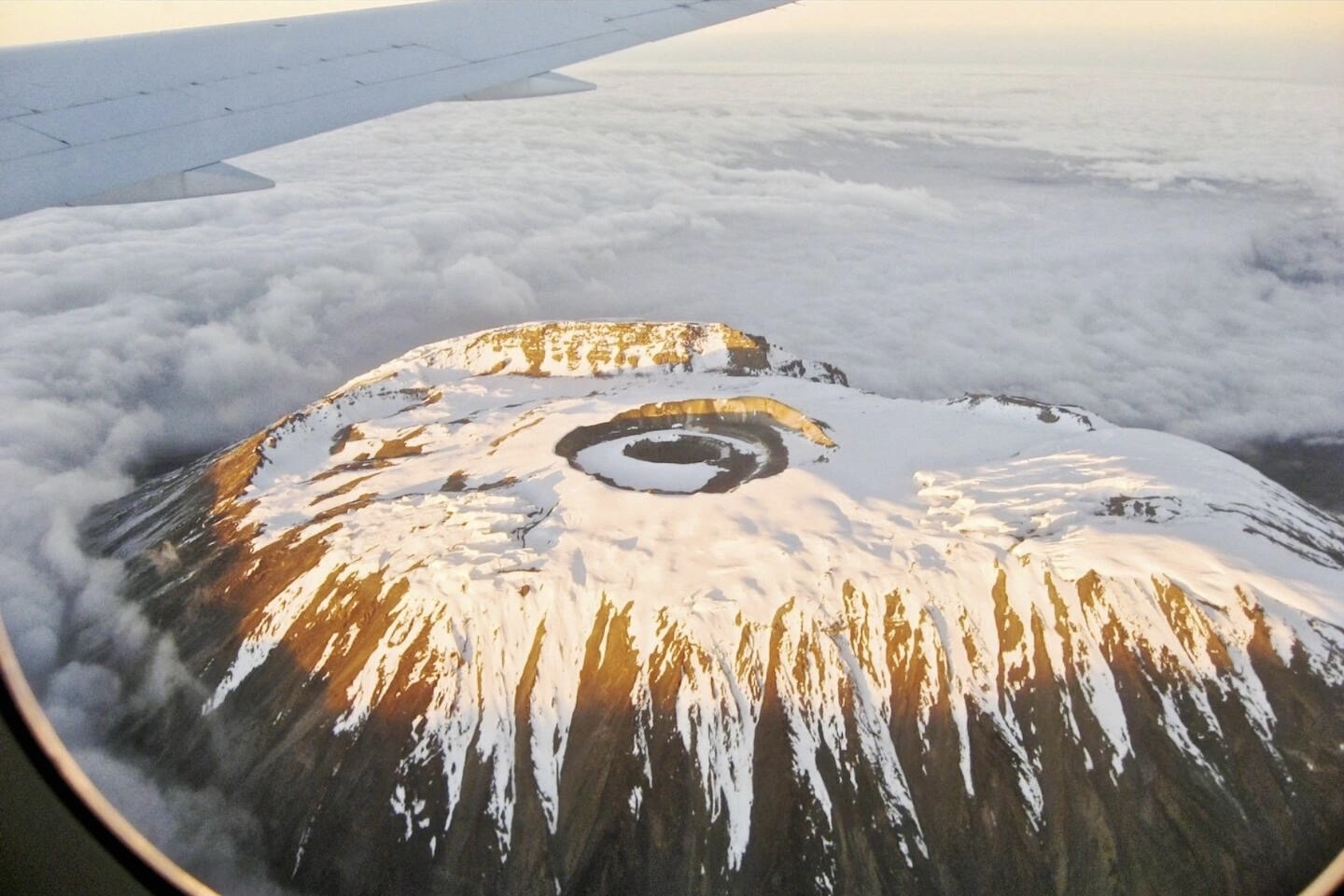
What is it?
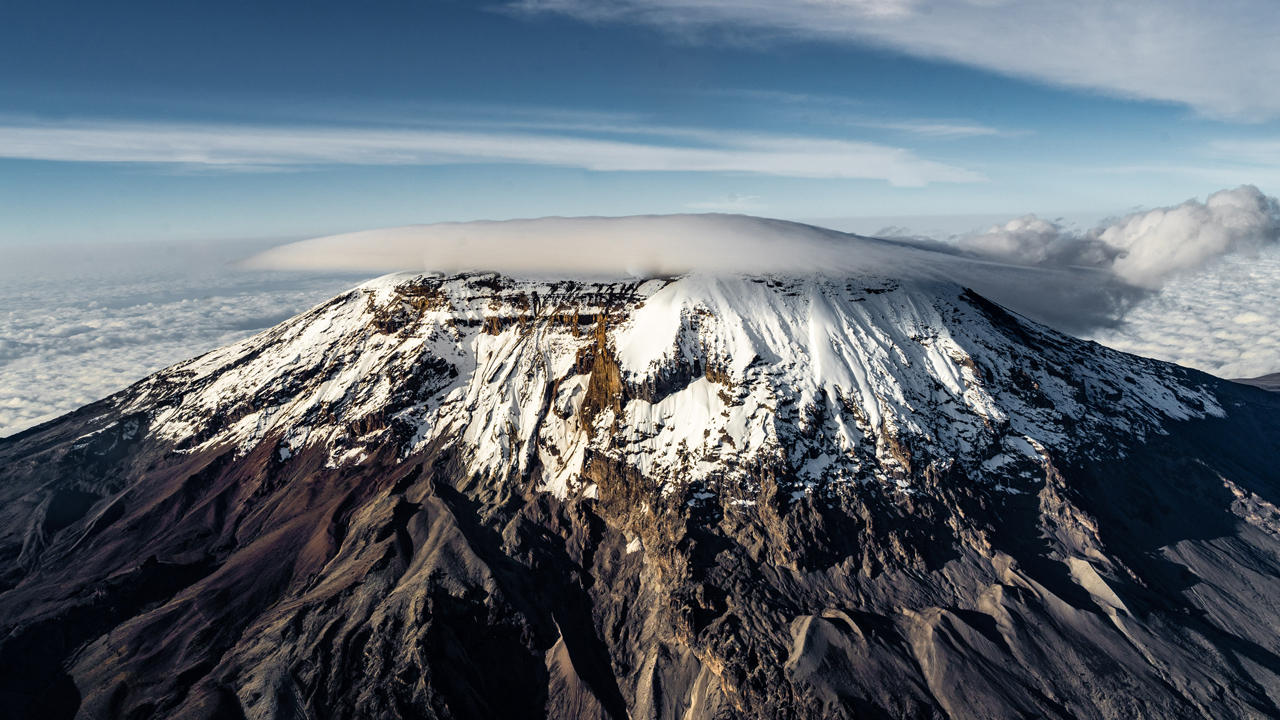
Mount Kilimanjaro is a dormant volcanic mountain in northeastern Tanzania, near the border with Kenya. It is famous for being:
The tallest mountain in Africa (often called the "Roof of Africa").
The tallest freestanding mountain in the world (not part of a range).
Key Facts
Height: 5,895 meters (19,341 feet) above sea level.
Summit: Uhuru Peak (on the crater rim of Kibo, the highest of its three volcanic cones — Kibo, Mawenzi, and Shira).
Last major eruption: About 360,000 years ago (though Kibo shows signs of minor activity as recently as 200 years ago).
Snow & Glaciers: Despite being near the equator, it has permanent ice fields, though these are rapidly shrinking due to climate change.
Climbing Kilimanjaro
It is a hiking summit, not a technical climb (no ropes or ice axes needed for standard routes, except possibly very basic crampons on some routes in icy conditions).
Success Rate: Around 65% for all climbers, rising to ~90% for 7-8 day routes.
Main Challenge: Altitude sickness, not technical difficulty.
Popular Routes: Marangu ("Coca-Cola" route — hut accommodation), Machame ("Whiskey" route — scenic, camping), Lemosho, Rongai, and Northern Circuit.
Time: Minimum 5–9 days recommended; longer is better for acclimatization.
Best Time to Climb
Dry seasons (best): Late June to October, and December to late February/March.
Wetter seasons: March–May (long rains) and November (short rains).
Do you need a guide? Yes
It is mandatory to climb with a licensed guide and register in the national park.
In summary: Kilimanjaro offers an incredible, non-technical high-altitude trekking experience, but proper preparation and choosing a longer route are key to reaching the summit.
Reviewed by Gilberto.