Tanzania: The Cradle of Wonder – A Deep Dive into East Africa’s Most Iconic Destination
Tanzania is not merely a country; it is a sensory symphony. It is the whisper of wind across endless savannahs, the earthy musk of elephants on ancient migration routes, the spice-laden breeze of Zanzibar’s stone alleys, and the silent, snow-capped grandeur of Africa’s highest peak. As one of East Africa’s most diverse and iconic destinations, Tanzania offers a mosaic of wildlife, landscapes, and cultures that few places on earth can rival. To understand Tanzania is to understand the raw, untamed heartbeat of the continent.
Geography & Nature: A Continent in Miniature
Tanzania’s geography is a geological masterpiece. It encapsulates nearly every major African ecosystem within its 947,300 square kilometers. The country is defined by the Great Rift Valley, a tectonic scar that runs north to south, creating dramatic escarpments, deep lakes, and volcanic craters.
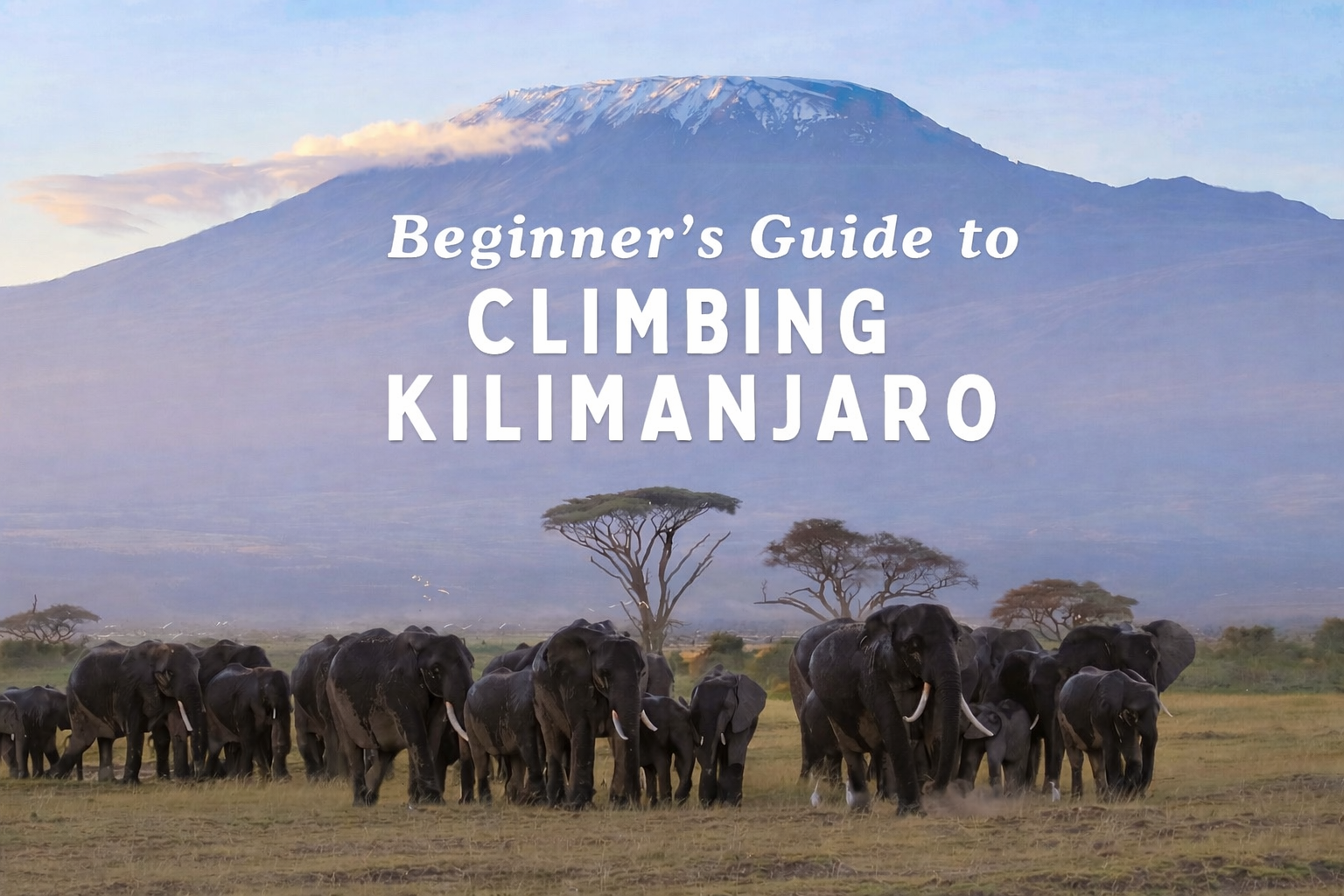
Mount Kilimanjaro is the undisputed monarch of the landscape. Rising 5,895 meters (19,341 feet) above the shimmering plains, it is the tallest freestanding mountain in the world. Unlike other great peaks that belong to ranges, Kilimanjaro stands alone, a dormant volcano with three cones—Kibo, Mawenzi, and Shira. Climbers can pass through five distinct ecological zones in a single week: from cultivated farmland at the base, through dense rainforest where colobus monkeys chatter, into heath and moorland of giant lobelias, across an alpine desert of volcanic scree, and finally onto the icy summit of Uhuru Peak. The sight of the equatorial sun rising over the glaciers of the “Roof of Africa” is a pilgrimage moment for thousands of trekkers annually.
To the west lies the Serengeti National Park, whose name comes from the Maasai word Siringet, meaning “the place where the land moves on forever.” This 14,750-square-kilometer expanse of rolling grasslands, riverine forests, and kopjes (granite outcroppings) is the stage for the Great Migration—the longest and largest overland animal migration on Earth. Over 1.5 million wildebeest, 400,000 zebras, and 200,000 gazelles trace a 1,000-kilometer circular route, driven by instinct and rain. They cross crocodile-infested rivers like the Grumeti and Mara in spectacular, frenzied leaps of life and death. The Serengeti is not just a park; it is a cyclical epic of survival.
South-east of the Serengeti lies the Ngorongoro Crater, a UNESCO World Heritage Site often called Africa’s “Garden of Eden.” It is the world’s largest intact, inactive, and unfilled volcanic caldera, formed some 2.5 million years ago when a giant volcano exploded and collapsed inward. The crater floor, 260 square kilometers in area, is a self-contained wildlife amphitheater 600 meters deep. Its walls enclose a dizzying variety of habitats: a soda lake flush with flamingos, swamps, open grasslands, and acacia woodlands. Here, you can see the “Big Five” in a single morning—lion, elephant, buffalo, leopard, and the endangered black rhino. Remarkably, the crater is also home to the Maasai, who have co-existed with the wildlife for centuries through a unique system of community conservation.
Other geographical jewels include Lake Victoria, the largest tropical lake in the world and the primary source of the Nile River. Its shallow, tea-colored waters support a vast fishery and a unique way of life for communities like the Sukuma and Luo. To the west, Lake Tanganyika is the second deepest lake in the world (1,470 meters), a deep, ancient rift lake harboring hundreds of endemic cichlid fish species.
Wildlife & Safaris: The Ultimate Big Game Experience
Tanzania has long been considered one of the premier safari destinations globally, not merely for the quantity of animals but for the quality of the viewing experience. Over 38% of the country’s land is protected as national parks, game reserves, marine parks, and conservation areas—a higher proportion than almost any other country.
Beyond the Serengeti and Ngorongoro, Tarangire National Park offers a dry-season spectacle that rivals the Serengeti. Its name comes from the Tarangire River, the only permanent water source in the region. From June to October, as dust devils swirl across the baked earth, up to 300 elephants gather to dig for water in the dry riverbed. The park is famous for its ancient baobab trees—massive, bottle-shaped trees with silvery bark and twisted branches that look as if they have been planted upside-down. Tarangire also holds Tanzania’s largest population of the elusive African wild dog (painted wolf), one of the continent’s most successful hunters.
For those seeking true wilderness, Nyerere National Park (formerly part of the Selous Game Reserve) is monumental. At over 30,000 square kilometers, it is twice the size of the Serengeti. This is a water-based safari paradise, dominated by the Rufiji River. Unlike the vehicle-crowded roads of northern parks, here you can explore by boat, gliding past hippos yawning, crocodiles sliding into tea-colored water, and malachite kingfishers flashing electric blue. Walking safaris were pioneered in this region, allowing you to follow bush elephant tracks and learn the medicinal uses of acacia bark.
The Mahale Mountains National Park and Gombe Stream National Park offer a completely different safari: primate trekking. Locked against the crystalline shores of Lake Tanganyika, these parks have no roads and are accessible only by boat. In Gombe, Jane Goodall conducted her groundbreaking research on chimpanzees in the 1960s. Today, visitors can hike through dense, dripping forest to spend an hour with habituated chimp families—watching them use tools to extract termites, groom each other, or throw playful tantrums. It is an intimate, humbling wildlife encounter.
People & Culture: A Tapestry of 120 Threads
Tanzania’s human geography is as varied as its physical geography. With over 120 distinct ethnic groups, the nation has forged a remarkable sense of unity without erasing diversity. The official languages are Swahili (Kiswahili) and English. Swahili acts as a true lingua franca; unlike in many post-colonial states, it is spoken by nearly all Tanzanians, from the wealthiest Dar es Salaam banker to the Hadzabe hunter-gatherer in the Lake Eyasi bush.
The Maasai are arguably the most internationally recognized ethnic group. These semi-nomadic pastoralists, dressed in striking red shúkàs (cloth wraps) and adorned with elaborate beaded jewelry, have maintained their traditions despite modernity. A young Maasai warrior (moran) proves his value by killing a lion—though today, lion-killing is discouraged and replaced by athletic jumping competitions (adamu) and community conservation roles.
On the shores of Lake Eyasi live the Hadzabe people, one of the last true hunter-gatherer groups in Africa. They speak a language punctuated by click consonants and share no genetic or linguistic relationship to any other Tanzanian group. A morning with the Hadzabe involves following men with handmade bows as they hunt dik-dik or guinea fowl, while women dig for tubers and collect baobab fruit. They have no calendar, no leaders, and no farming—existing in the same way their ancestors have for 10,000 years.
On the coast, Zanzibar’s Stone Town is a living museum of Swahili civilization. A UNESCO World Heritage Site, its labyrinthine alleys see Arab wooden doors with brass studs, Indian barazas (stone benches), Omani fortresses, and Persian-influenced bathing pools. The culture here is Islamized and urbane, a stark contrast to the mainland. The famed Spice Tours are not just tourist attractions—they explain the island’s brutal history of clove, nutmeg, and cinnamon plantations, which once made Zanzibar the most valuable real estate in the Indian Ocean.
Dar es Salaam (meaning “Haven of Peace”) is a sprawling, chaotic, vibrant economic hub of over six million people. Its daladala (private minibuses) race through streets lined with mango trees. The Kariakoo market is a glorious assault on the senses: pyramids of tomatoes, live chickens, second-hand clothes from Europe, and the scent of grilled mishkaki (beef skewers). Dodoma, the political capital since 1974, is quieter, planned, and inland—an attempt to shift development away from the coast.
History: From Prehistory to Union
Tanzania is one of the oldest continuously inhabited places on Earth. In Olduvai Gorge (within the Ngorongoro Conservation Area), Louis and Mary Leakey discovered the fossilized skull of Zinjanthropus boisei (Paranthropus boisei) in 1959, proving beyond doubt that human evolution occurred in Africa. Fossils from Laetoli, near Olduvai, preserve 3.6-million-year-old hominid footprints in volcanic ash—the unmistakable stride of upright ancestors.
The coast’s history is one of a Swahili trading network linking Kilwa, Zanzibar, and Mafia with Persia, India, and China. Gold from Great Zimbabwe flowed through Kilwa’s ports. The Portuguese arrived in 1498, then the Omani Arabs in the 17th century, who established the brutal slave and ivory trade. At its height, the market of Zanzibar supplied 50,000 slaves annually to the Middle East.
Mainland Tanganyika became a German colony (German East Africa) in the 1880s, then passed to British mandate after WWI. Independence came peacefully in 1961 under Julius Nyerere—called Mwalimu (Teacher). Nyerere’s “Ujamaa” (familyhood) policy attempted to create African socialism through forced villagization. Economically it failed, but uniquely for Africa, Nyerere voluntarily retired from power, unified 120 tribes into a single national identity, and made Swahili the national language. The Union of Tanganyika and Zanzibar in 1964 created modern Tanzania—a rare, durable political marriage between a socialist mainland and a revolutionary island.
Economy: Foundations of the Future
Tanzania has one of the fastest-growing economies in Africa, though it remains deeply poor. Agriculture employs 65% of the workforce, yet contributes only 28% of GDP. Cash crops include coffee (the rich Arabica beans of the Arusha region), cotton, cashew nuts, and tea. Most farming is subsistence—maize, cassava, sweet potatoes—vulnerable to droughts.
Tourism is the foreign exchange earner, accounting for over 17% of GDP and supporting hundreds of thousands of guides, lodge staff, and artisans. A single safari vehicle in the Serengeti can generate more income for the government than a hundred cattle. Kilimanjaro climbing permits, conservation fees in Ngorongoro, and beach resorts in Zanzibar fuel a complex value chain. Post-COVID, the industry is rebounding strongly, with Tanzania positioning itself as a high-value, low-volume destination for authentic wilderness.
Mining is the third pillar. Tanzania is Africa’s fourth-largest gold producer, with mines at Bulyanhulu, Buzwagi, and North Mara. It also holds graphite, diamonds, and gemstones—including the rare tanzanite, found only in a two-square-mile area near Mount Kilimanjaro. This blue-violet gemstone, caused by vanadium in the crystal structure, was first discovered in 1967 and is now rarer than diamond.
Why People Visit: The Immersion, Not the Checkbox
People come to Tanzania for transformation, not just a photograph.
Safari Adventures: But not the safari of old. Today you can do a walking safari in Ruaha, a hot-air balloon over the Serengeti at dawn, or a night drive in Lake Manyara to see bush babies and genet cats. The safari is a constant, humbling reminder that you are a guest in nature’s house.
Climbing Kilimanjaro: It is not a technical climb, but it is a mental and physical war against altitude. Success rates for the 6–9 day routes (Machame, Lemosho, Rongai) are high, but the ache in your lungs and the cold at Barafu Camp at midnight are real. Those who stand on Uhuru Peak report a life-changing clarity.
Beach Holidays in Zanzibar: Zanzibar’s east coast—Paje, Bwejuu, Jambiani—offers powder-white sand, turquoise lagoons, and high-quality kitesurfing. The north coast (Nungwi, Kendwa) is for sunset dhow cruises and sea turtles. But the magic is combining the beach with Stone Town’s winding nights, where the call to prayer merges with taarab music and the scent of pilau rice.
Cultural Experiences: No longer staged. You can sleep in a Maasai manyatta (mud-and-cow-dung hut), learn to shoot a Hadzabe arrow, cook ugali and nyama choma (roasted meat) with a Chaga family on Kilimanjaro’s slopes, or join the mwaka kogwa festival in Zanzibar, where the Swahili New Year is celebrated by mock fighting and burning of straw huts.
Conclusion
Tanzania is not a place you see; it is a place you feel. It is the exhaustion after a migration crossing, the awe of a leopard dragging an impala up a sausage tree, the sweat on a Khaki shirt hiking the Ngorongoro rim, and the quiet joy of learning the Swahili word pole pole (“slowly, slowly”). It is East Africa in its most authentic, diverse, and majestic form—a nation that has preserved its wild heart while welcoming the world to witness it.