Where did the word "safari" come from and what does it mean? How are safaris of the past different from the modern adventuring in Africa? Where to go for the best experience? All about this type of nature vacation - by safari fans and experts.
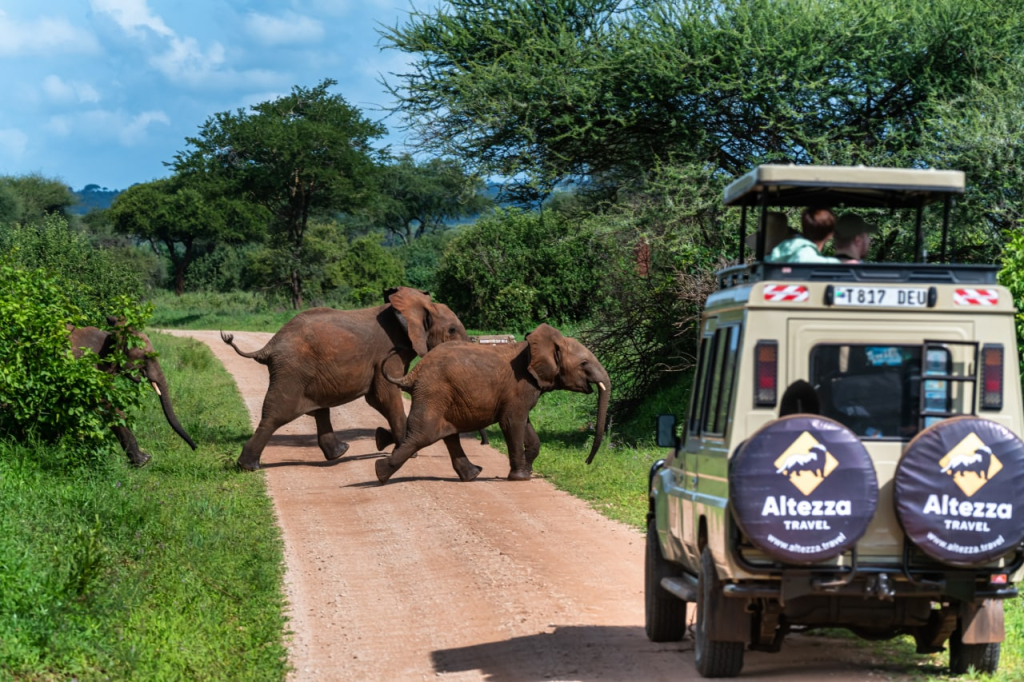
Modern safari in a Tanzanian national park, 2021
Safari is…
When we hear the word "safari," we imagine a group of tourists moving through an African savannah in search of large wild animals: lions, rhinos, buffalo, and elephants. In historical pictures, we often see men in pith helmets with guns in their hands, while modern pictures show people in SUVs holding long lens cameras. It is an animal hunt - hunting in the literal sense, or just observing and photo-hunting - in the vastness of the hottest continent. Fashion connoisseurs may also think of beige-colored clothing with a straight cut, the obligatory wide belt, and a wide brimmed hat, inherited from the British military who served in Britain's African colonies. All these are our first associations with the beautiful word "safari," which sounds like it could be an Arabic given name.
A modern-day safari is a sightseeing trip to an African national park, the main purpose of which is to observe wild animals. In the past, safaris were organized with the objective of hunting large animals. Africa's canonical Big Five: the elephant, lion, rhino, African buffalo, and leopard are associated with the hunting traditions of Africa. Among hunters, these five mammals were considered to be the most dangerous and difficult to pursue, and their body parts made the most coveted trophies.
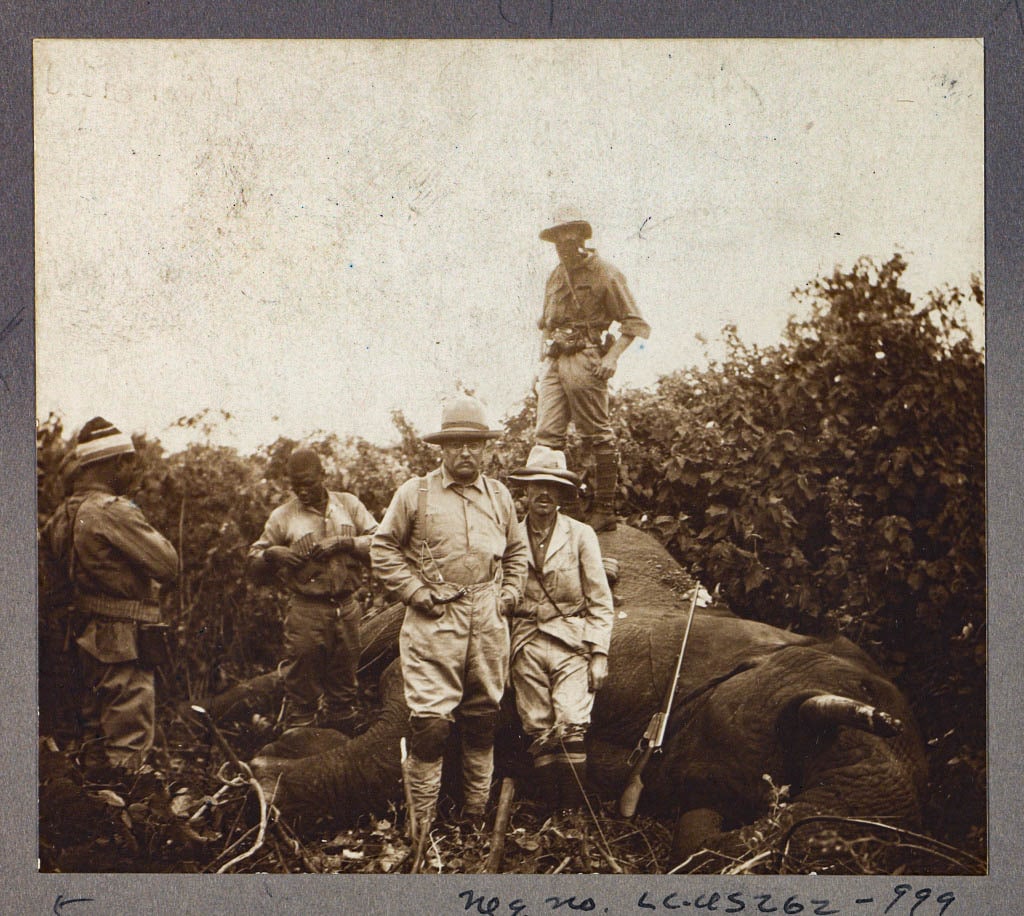
Safari one hundred years ago. Theodore Roosevelt on a hunt in East Africa. Published 1919, Library of Congress archives.
Nowadays, hunting on safari is generally condemned by modern society. However, it is still permitted in a very limited number of reserves. This very expensive pastime is strictly regulated by law. So, the vast majority of safaris today are rides on off-road vehicles that go along the routes designated by national parks, where you can meet wild animals, gaze at them up close or through binoculars, take pictures and observe their behavior in the natural environment.
The word "safari" itself comes from Swahili - the main language of the people of East Africa. It means "journey, trip" and goes back to the Arabic word “safar” with the same meaning. In Swahili-speaking countries, the term refers to any journey. There is even a common phrase, safari njema! It is a wish for a good and pleasant journey.
How has safari become a popular pastime?
The Oxford Dictionary defines “safari” as “a trip to see or hunt wild animals, especially in east or southern Africa”. In the West, this word was popularized by the British traveler Richard Francis Burton, who explored East Africa in the 19th century with John Henning Speke and took great pleasure in learning the languages and customs of the peoples he met. Gradually the word “safari” spread into other languages and was used to refer to travel in the wilds of East Africa.
By the way, Richard Burton became famous not only as a linguist and ethnographer but also as a person who translated into English the ancient Indian Kamasutra as well as the Arabic and Persian tales of the Thousand and One Nights. Moreover, he was a rare non-Muslim pilgrim to Mecca and had to disguise himself as a sheikh or a dervish to secretly make those pilgrimages. Burton is also famous as the first European to discover the great African Lake Tanganyika, which stunned him with its beauty.
One of the most well-known historical African safari trips was the long expedition embarked upon by the 26th U.S. President Theodore Roosevelt. In 1909 he went to Africa with his son and a large escort team for almost a year, just after his presidential term ended. Photos of Roosevelt on the hunt were printed in the newspapers, and a documentary about the trip was shown immediately upon his return. There is a book report of African Game Trails written by Roosevelt himself. We may be struck today by the list of animals killed on that safari, which is scrupulously given in the book. But the expedition was equipped by the Smithsonian Institution and allegedly had scientific motivations behind it.
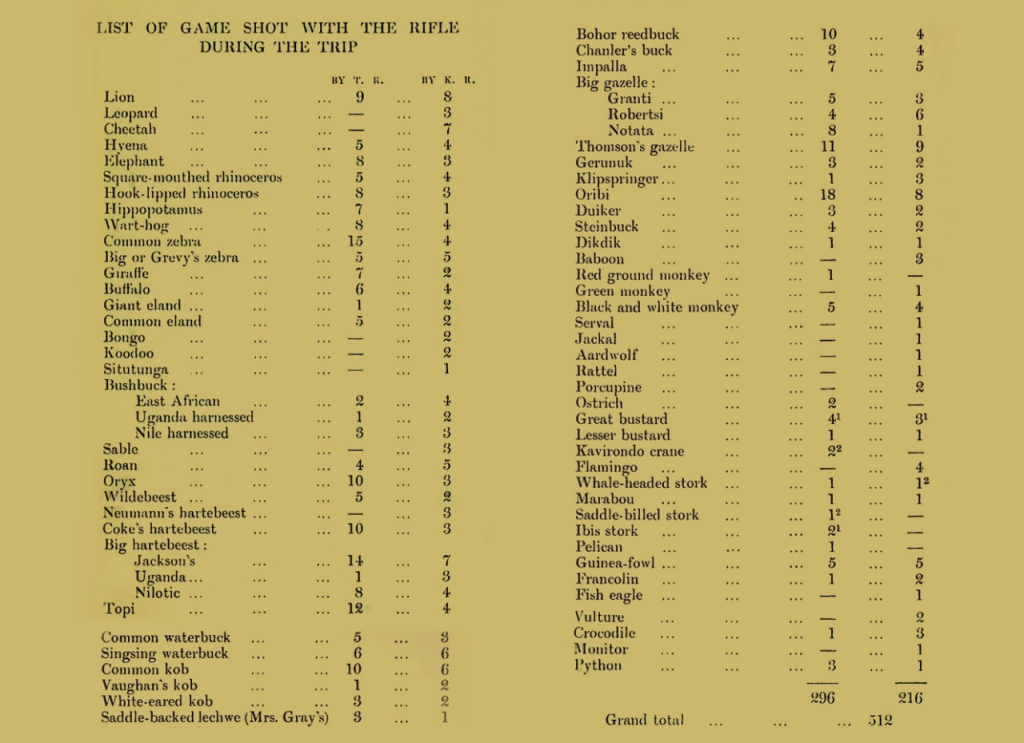
The List of big game shot by the Roosevelt father and son
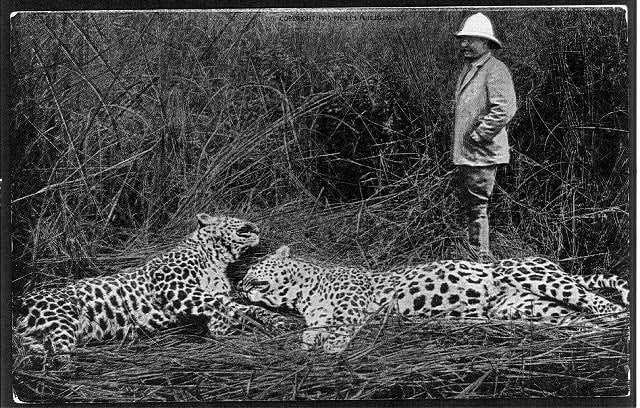
U.S. President Theodore Roosevelt with shot leopards, 1910, Library of Congress archives
The expedition brought back from Africa more than 23,000 specimens of plants and animals. It is recorded that 512 large animals have been shot personally by the president and his son, and a total of about 11,400 animals were killed or captured. It took the Institute eight years to catalog all the specimens. They became the basis of today's National Museum of Natural History in Washington. Therein lay the contradiction in Theodore Roosevelt's personality: his passion for hunting was joined with his desire to champion the interests of conservationists and scientists. It was he who founded the U.S. Forest Service. Roosevelt was also the first president to establish national parks and numerous protected areas in the United States.
"Roosevelt in Africa" documentary. Filmed in 1909. Library of Congress archives
Safari as a popular cultural phenomenon was heavily influenced by the American journalist and writer Ernest Hemingway. In the 1930s he traveled through Kenya and Tanganyika (as the mainland territory of present-day Tanzania used to be called). It is known that Hemingway was impressed by Africa’s stunning nature as well as by the magnificent Mount Kilimanjaro. Hunting was one of his passions - he hunted a lot in the Serengeti, as well as near Lake Manyara and today's Tarangire National Park. His love of nature and hunting influenced Patrick, the writer's son, who had been traveling with his parents since childhood. Patrick Hemingway eventually moved to Tanzania and lived there for 25 years. He also worked in Uganda and Kenya and even started his own safari business.
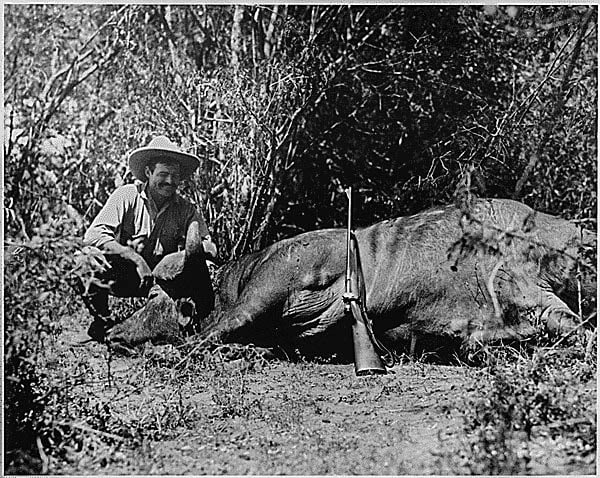
Ernest Hemingway on safari in Africa, 1933-1934, from the John F. Kennedy Library Archives. John F. Kennedy Library
Ernest Hemingway's best-known "African" works are the short story "The Snows of Kilimanjaro '', and the "Green Hills of Africa" novella, which essentially is an autobiographical report of his family’s safari travels. His other drafts about Africa were compiled into the “True at First Light” book and published after the writer’s death by Patrick Hemingway.
Adventure novels on the topic of safari started to appear as early as the 19th century. We can remember the classic Jules Verne’s first novel, “Five Weeks in a Balloon”, which was about a journey in the air over Africa. We may also think of a popular novel by Henry Haggard, called “King Solomon's Mines”, about adventures in South Africa, or of the “World Voyage of a Young Parisian” by Louis Boussenard.
Another genre of literature that has preserved many early safari stories was adventure diary entries. Here one may think of William Kingston's “Adventures in Africa by an African Trader”. Allegedly those entries were written by a real but unidentified ivory trader and Kingston used those writings to compile a book. Another notable work of this genre was “Trader Horn: A Young Man's Astounding Adventures in 19th Century Equatorial Africa”, written by another ivory trader, Alfred Horne. Back then many parts of Africa remained unknown to Europeans, and such books fuelled the public interest in the exploration of the African continent with its incredibly rich geographical, cultural, and biological diversity.
The age of cinematography began in the early 20th century, and there were many popular adventure films set in Africa (most often in East or Central Africa) that also added interest to the topic of safari. The above-mentioned “Trader Horn” was adapted in 1931, although greatly augmented by fictional events. In the mid-20th century, the theme of jungle adventure was popular, and on cinema screens, you could see the African expanses being added alongside such locations as the jungles of Southeast Asia and the Amazon. Later, the 1985 film "Out of Africa'' starring Robert Redford and Meryl Streep had a major influence on the return to fashion of the safari style in clothing and interior design. It was based on the autobiographical book by Karen Blixen, who lived for many years in Kenya, and won seven Academy Awards and three Golden Globes, among other honors.
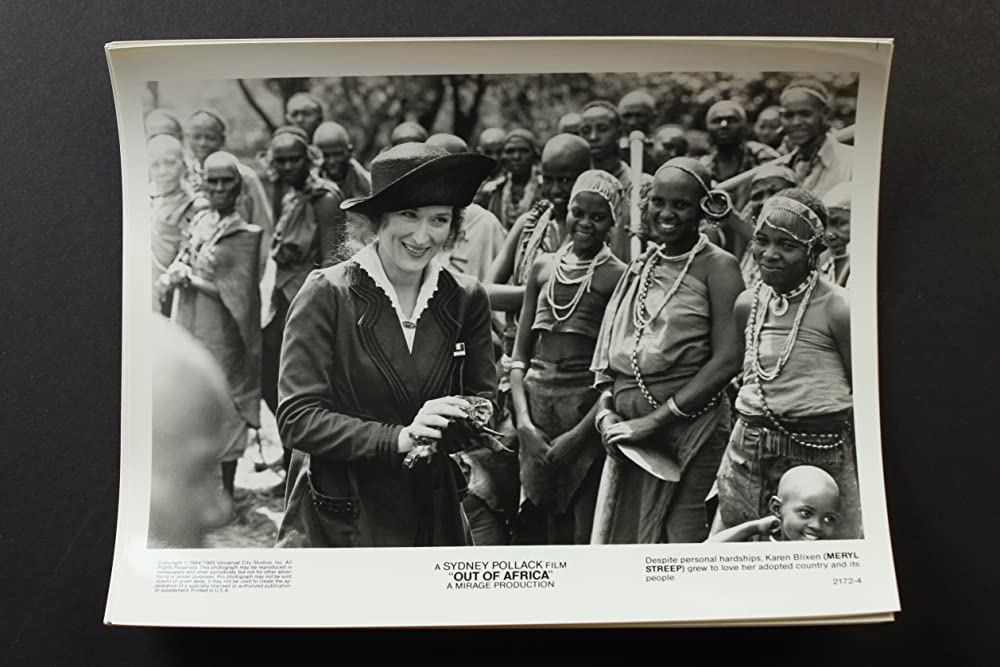
Meryl Streep as Karen Blixen, "Out of Africa," 1985, Mirage Enterprises
The growing interest in the modern type of safari travel was promoted even further by numerous documentaries, such as those from the National Geographic and Discovery channels, filmed in East African national parks, most notably in the Serengeti. Scenes of people driving through the savannah in an open car and observing various wild animals in their natural habitats while taking photos have encouraged many to plan their personal adventure - a trip to the great natural reserves of East Africa. Many travelers are also pleasantly surprised to find out that apart from driving in a car, there are numerous other ways of visiting the wild places of Africa.
What kinds of safaris are there?
A classic safari in today’s East Africa is a trip in an off-road vehicle with a driver-guide through the expanse of a national park where wild animals live in their natural habitats. The forests and savannas are roamed by herds of elephants, buffalo, zebras, and antelope of different species, as well as by giraffes which wander alone or in small groups. The trees are often occupied by monkeys and birds, while warthogs hide in the shade of bushes. Large herbivores are hunted by lion prides and solitary carnivores such as leopards and cheetahs. Jackals and hyenas choose smaller victims. Hippos and crocodiles hide in rivers from the heat. Travellers who go on safari have a unique opportunity to observe all those spectacular environments that are teeming with life.
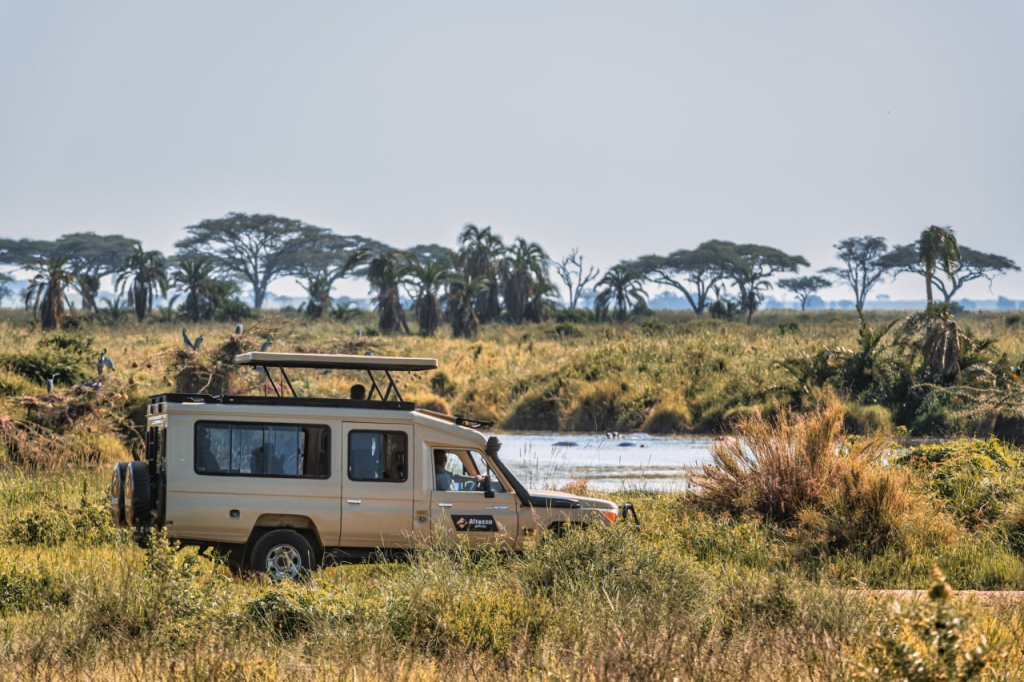
An off-road safari vehicle in a Tanzanian nation