Mount Kilimanjaro (5,895 m / 19,341 ft): The Roof of Africa
Mount Kilimanjaro is not just a mountain. It is a paradox etched onto the Earth’s surface: a frozen spire of ice and snow standing sentinel over the sweltering African savanna, just three degrees south of the equator. Rising in solitary grandeur to 5,895 meters (19,341 feet) above sea level, it is the highest point in Africa, the tallest free-standing mountain in the world, and one of the planet’s most iconic natural landmarks. Its fame is not accidental. It is a product of geological wonder, climatic contradiction, literary legend, and human aspiration. To understand why Kilimanjaro is so famous is to understand a story that spans millions of years and touches millions of lives.
The Unforgettable Geography of a Solitary Giant
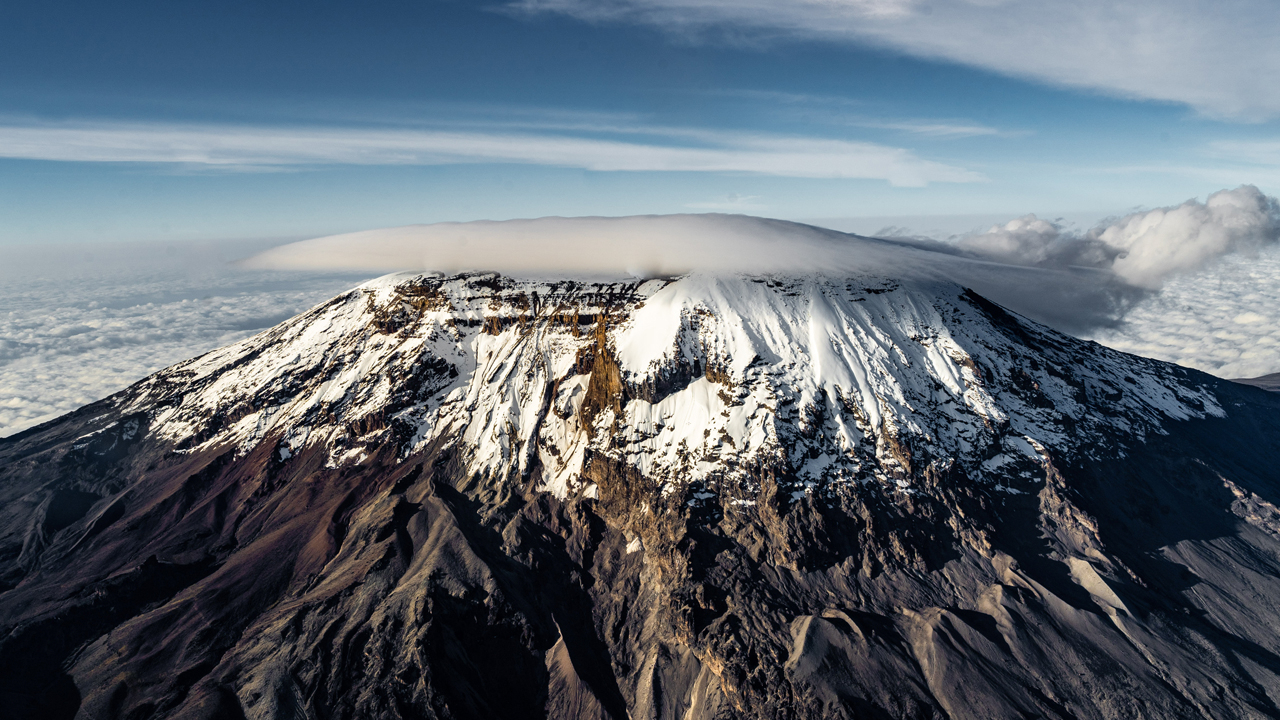
Most of the world’s great mountains—Everest, K2, Annapurna—belong to ranges, huddled together like frozen titans. Kilimanjaro stands alone. It is a stratovolcano, formed by layers of lava, tephra, and ash, and it rises from the rolling grasslands of northeastern Tanzania as if dropped from the sky. Its base spans roughly 100 kilometers (62 miles) in circumference, so vast that it creates its own weather system. From a distance, the mountain appears to float above the haze, a two-peaked colossus with Kibo (the highest summit) on one side and Mawenzi (a jagged, eroded remnant) on the other.
This isolation is key to its fame. A traveler driving through the dusty plains of Amboseli National Park in Kenya or the coffee plantations of Moshi, Tanzania, sees Kilimanjaro long before they reach it—sometimes from over 150 kilometers away. On a clear morning, the rising sun strikes its summit glaciers, and the mountain glows like a burning coal against a lilac sky. That visual shock—a white cap in the tropics—burns into memory. Unlike the crowded Himalayan skyline, Kilimanjaro has no rivals. It is the undisputed monarch of the African horizon.
Snow on the Equator: The Climatic Marvel
Perhaps the single most famous fact about Kilimanjaro is that it is snow-capped year-round while sitting on the equator. At sea level in Tanzania, temperatures routinely exceed 30°C (86°F). But atop Kibo, the mercury plunges to -20°C (-4°F) or lower. This extreme gradient creates five distinct ecological zones, making Kilimanjaro a compressed journey from the tropics to the Arctic in just a few days’ walk.
The lower slopes are a mosaic of small farms and montane forest, thick with colobus monkeys, sycamore figs, and the constant whine of cicadas. As you climb, the forest gives way to heath and moorland, where giant lobelias and groundsels—prehistoric-looking plants that grow up to three meters tall—adapt to freezing nights and baking days. Above 4,000 meters, the landscape becomes an alpine desert of scree and volcanic rock, where almost nothing lives. Finally, near the summit, the glaciers begin: the Furtwängler Glacier, the Credner Glacier, and the Northern Ice Field, relics of the last ice age.
That these glaciers exist at all is a wonder. They persist because at 5,895 meters, the temperature is low enough to preserve ice, even under a nearly vertical sun. Yet they are also a symbol of fragility. Scientists estimate that Kilimanjaro has lost more than 80% of its ice cover since 1912. The famous “snows of Kilimanjaro” are retreating rapidly, and some models predict they could vanish entirely within two to three decades. This impending loss has only deepened the mountain’s fame, transforming it from a static wonder into a poignant monument to climate change.
A Literary Legend: Hemingway’s Immortal Sentence
Long before millions of tourists attempted the summit, Kilimanjaro became immortalized in print. In 1936, Ernest Hemingway published “The Snows of Kilimanjaro,” a short story that opens with one of the most famous epigraphs in literature:
“Kilimanjaro is a snow-covered mountain 19,710 feet high, and is said to be the highest mountain in Africa. Close to the western summit there is the dried and frozen carcass of a leopard. No one has explained what the leopard was seeking at that altitude.”
With those few lines, Hemingway transformed a real geographic feature into a metaphor for aspiration, mystery, and unfulfilled potential. The story follows Harry, a writer dying of gangrene on safari, who reflects on the life and work he wasted. The leopard on the summit represents purity of purpose—a creature that reached the highest point on Earth for reasons no human can fathom. Hemingway never actually climbed Kilimanjaro (he visited its lower slopes), but his fiction fixed the mountain in the Western consciousness as the ultimate symbol of a quest beyond reason.
That leopard’s carcass was not invented. In 1926, a hunter named Richard Reusch indeed found a frozen leopard near the crater rim. To this day, no one knows why a large predator would ascend into the death zone, but the mystery is part of Kilimanjaro’s magic. Unlike Everest, which is often associated with conquest and commerce, Kilimanjaro retains an aura of inscrutable wildness—a place where, in Hemingway’s words, “it was not the mountain he could see but the plain he had left.”
The World’s Highest Walkable Summit
Perhaps the most practical reason for Kilimanjaro’s fame is this: you do not need to be a professional mountaineer to climb it. Everest demands years of training, technical ice climbing, oxygen tanks, and a US$50,000 permit. Kilimanjaro requires only good health, determination, and a guide. It is a “walk-up” mountain—the highest such peak on Earth. Of the Seven Summits (the tallest peaks on each continent), Kilimanjaro is by far the most accessible.
This accessibility has democratized high-altitude adventure. Each year, approximately 50,000 people attempt the climb, from teenagers to retirees, from CEOs to schoolteachers. They choose from six main routes: the popular Marangu (“Coca-Cola”) route with its hut accommodation; the scenic Machame (“Whiskey”) route; the remote, wilderness-like Rongai; and the challenging, acrophobia-inducing Western Breach. The fastest ascents take five days; wiser itineraries take seven or eight to allow for altitude acclimatization.
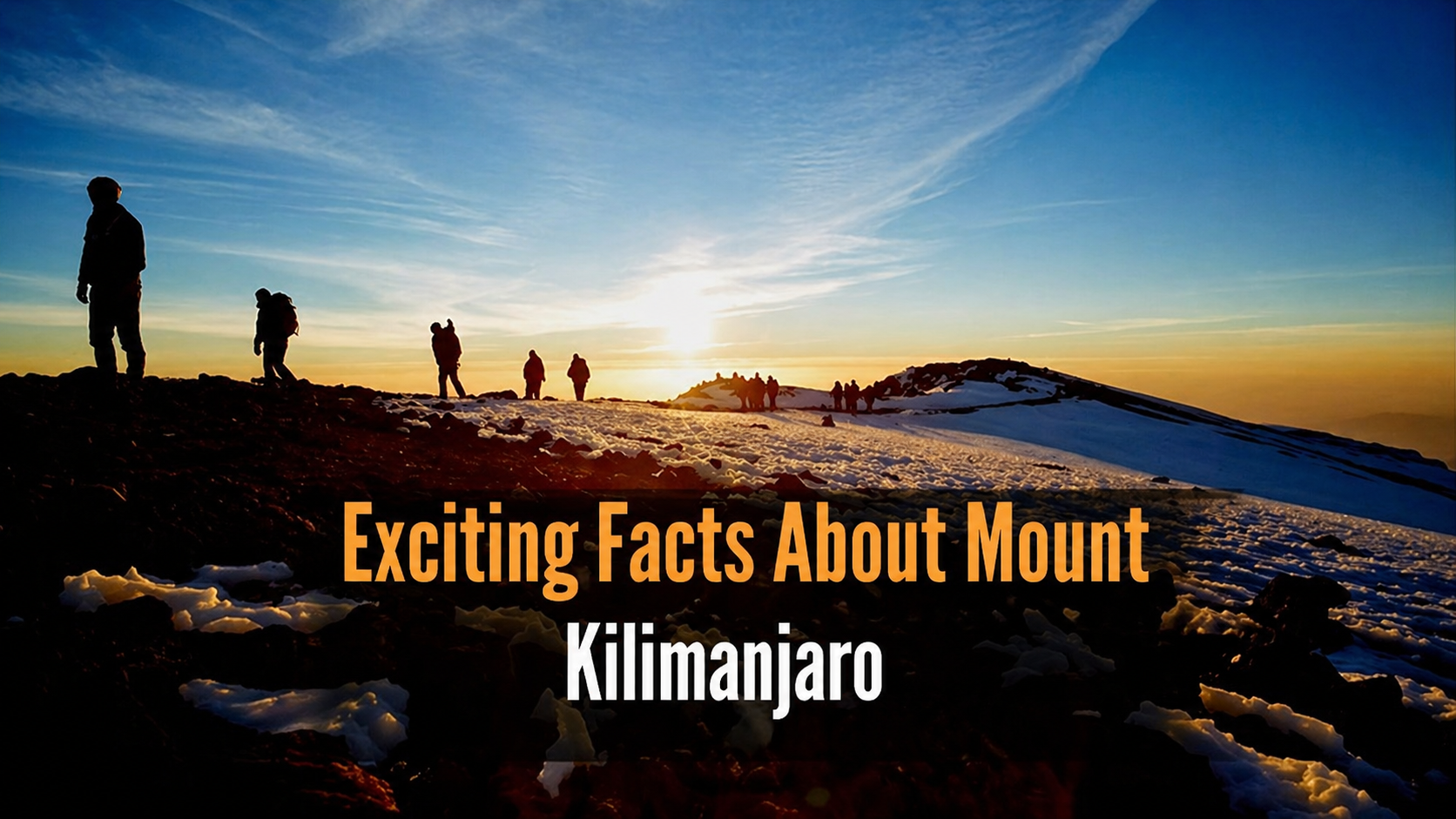
Success rates vary—roughly 65% of climbers reach Uhuru Peak (“Freedom Peak”), the highest point on the crater rim. Failure usually comes not from lack of fitness but from acute mountain sickness (AMS), a cruel malady that can strike even the fittest trekkers with headaches, nausea, and pulmonary edema. But for those who succeed, the sunrise from Gilman’s Point (5,681m) or Stella Point (5,756m) is a life-altering sight: a sea of clouds below, Mawenzi’s jagged fang to the east, and the vast curve of the African continent receding into blue haze.
A Journey Through Every Climate on Earth
One reason climbers return from Kilimanjaro speaking of it with almost religious reverence is the sheer sensory variety of the ascent. In a single week, you can experience:
Tropical rain forest (1,800–3,000m): Muddy, humid, orchid-choked trails; the call of the Hartlaub’s turaco; air so thick you swim through it.
Heath and moorland (3,000–4,000m): Giant lobelias that close their rosettes at night to trap heat; the red-tufted malachite sunbird; mornings crisp as bitten apples.
Alpine desert (4,000–5,000m): Scree, dust, and silence; the sun brutal by day, stars like shattered glass by night; your breath visible at noon.
Arctic summit zone (5,000–5,895m): Permafrost, ice cliffs, and wind that strips moisture from your lips; the air holding half the oxygen of sea level; each step an negotiation with exhaustion.
No other mountain on earth compresses so much biological and climatic diversity into such a short distance. To climb Kilimanjaro is to walk from the equator to the North Pole and back in six days.
The Cultural Heartbeat of the Chagga People
Long before Hemingway or the first European climber (German geographer Hans Meyer, in 1889), Kilimanjaro was sacred. The Chagga people have lived on its southern and eastern slopes for centuries, cultivating bananas, coffee, and yams on the fertile volcanic soil. They call the mountain Kilema Kyaro—“that which makes the journey impossible”—or, more commonly, Kilimanjaro, possibly meaning “mountain of whiteness” or “mountain of caravans.” For the Chagga, the snow and ice are not curiosities but the resting place of their gods. The mountain provides water for irrigation, forests for building, and spiritual grounding for rituals.
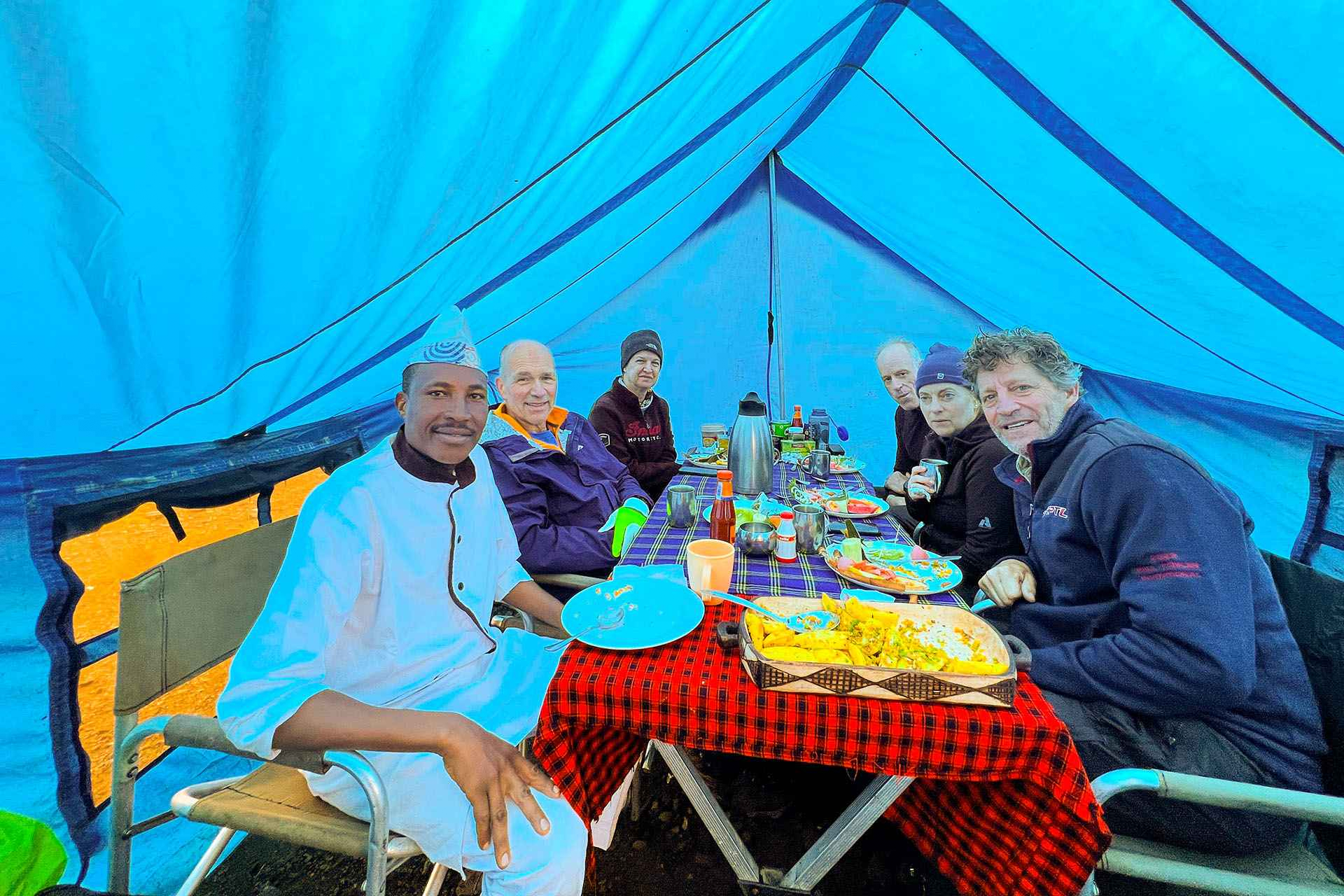
Today, the Chagga remain essential to Kilimanjaro’s fame as a tourist destination. Local guides, porters, and cooks make the climbing industry possible. A well-run climb employs an army of people: a head guide, assistant guides, a cook, a waiter, and up to 15 porters per trekker, hauling tents, food, gas cylinders, and even portable toilets. For many Tanzanians, Kilimanjaro is the engine of regional economy, funneling millions of dollars into the town of Moshi and providing jobs in a country where employment is scarce. However, the industry is not without controversy—low porter wages, unethical operators, and environmental degradation are ongoing challenges.
The Vanishing Snows as a Climate Icon
In the 21st century, Kilimanjaro has gained a new kind of fame: as a poster child for climate change. Photographs taken in 1912 show a mountain capped with thick, sprawling glaciers. Photographs from today show a patchy, shrunken remnant. Researchers estimate that if current rates continue, Kilimanjaro’s ice cap will be gone between 2030 and 2050—within our lifetimes.
This prospect has made the mountain a destination for “last-chance tourism”—people who want to see the equatorial snow before it becomes a memory. It has also sparked fierce scientific debate. Some studies attribute the ice loss primarily to warmer air temperatures; others point to decreasing humidity and solar radiation changes. But the symbolic power is undeniable. Kilimanjaro’s vanishing white crown has appeared in Al Gore’s An Inconvenient Truth, countless documentaries, and thousands of news articles. It asks a question that no one can ignore: if the snows of Kilimanjaro can disappear, what else might we lose?
Why Do We Climb It? The Transformation Question
Finally, Kilimanjaro is famous because it changes people. Ask anyone who has stood on Uhuru Peak at dawn, and they will struggle to find words. The experience is not merely physical—it is psychological. Altitude strips away pretense. The thin air makes thinking difficult. The cold makes comfort irrelevant. The long hours of walking reduce life to its simplest elements: food, rest, warmth, forward motion.
Many climbers arrive expecting to conquer the mountain. They leave realizing that the mountain, indifferent and ancient, does not care about conquest. What matters is the journey upward through the zones, the camaraderie with strangers, the quiet hum of a porter carrying 20 kilograms on his head, the sight of a giant groundsel silhouetted against a starry sky, and finally—after nausea and doubt and the midnight push to the summit—the small, still moment when the sun clears the horizon and you realize you are standing on the roof of Africa.
That is why Kilimanjaro is famous. Not because it is the tallest, or the hardest, or the most dangerous. It is famous because it is unforgettable. And in a world full of forgettable things, a mountain that refuses to leave your mind is worth every step.