KILIMANJARO CLIMBING PACKAGES & RATES 2026–2027
Why is climbing Mount Kilimanjaro expensive?
Climbing Kilimanjaro is expensive primarily because of mandatory government fees, the large support crew you are required to hire, and the complex logistics of operating at high altitude. Unlike a typical mountain hike, you cannot climb Kilimanjaro independently, which means the price reflects a fully guided, multi-day expedition.
THE FIXED COSTS – WHERE YOUR MONEY ACTUALLY GOES
Cost Component | Why It's Required | Approximate Cost (per person) | % of Total Cost |
|---|---|---|---|
Park & Conservation Fees | Mandatory daily fees set by the Tanzanian government for park access, conservation, and trail maintenance. | $900 – $1,400+ (for a 6-9 day trek) | 50-60% |
Mandatory Support Crew | You are legally required to hire licensed guides, porters, and cooks. This covers their wages, food, and park fees. | ~35-40% of total package | Significant portion |
Logistics & Equipment | Costs for 3 meals a day on the mountain, high-quality camping gear (tents, sleeping bags), safety equipment (oxygen, first aid), and park transfers. | Varies by operator | Included in package |
Route & Duration | Longer routes (8-9 days) have higher success rates due to better acclimatization but incur more days of park fees and crew wages. | An extra day can add $285-$350+ | Varies by duration |
Taxes & Tips | An 18% Value Added Tax (VAT) is applied to almost all services. Tips for your crew are also a standard part of the budget. | 18% VAT + $350-$500 for tips | Added to total |
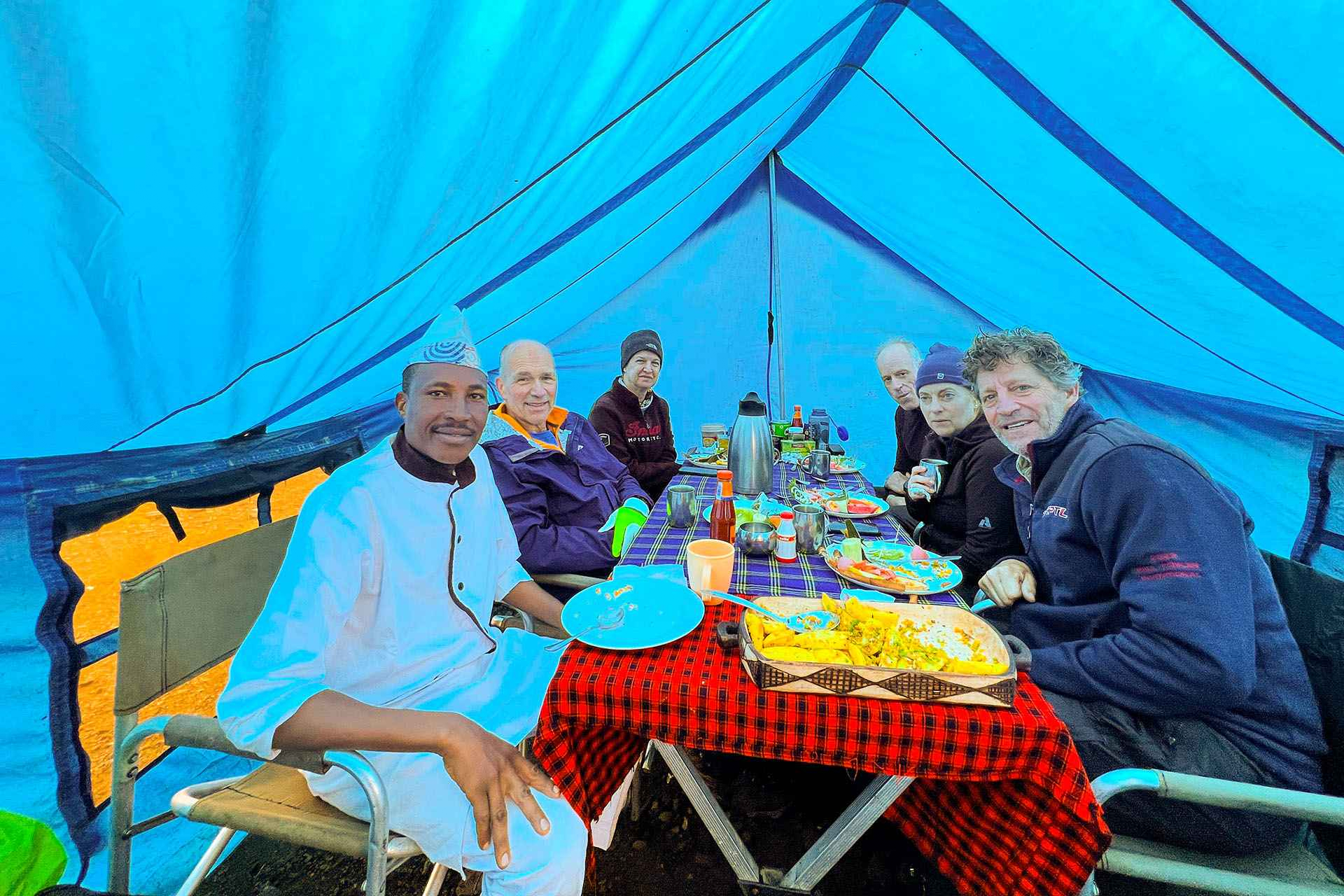
It’s impossible to organize an expedition without porters. They carry all the necessary equipment and supplies.
Kilimanjaro National Park fees
The single biggest reason for the high cost is the set of mandatory fees charged by the Tanzania National Parks Authority (TANAPA).
Conservation Fee: $70 per person, per day for access to the national park.
Camping or Hut Fee: $50-$60 per night for the use of designated campsites or huts.
Rescue Fee: A one-time fee of $20 per person, which covers ground rescue operations within the park.
Forest Fee: A one-time fee of $20 per person for routes that start in the rainforest zone.
The total park fees increase with every additional day you spend on the mountain. Each additional day can cost up to $350.
All park fees are subject to an additional 18% VAT.
Park fees are determined and regulated by TANAPA. Operators cannot change, reduce, or negotiate these amounts.
Standard park fees for 2026:
Route Duration | Park Fee (per person) |
|---|---|
6-day (Marangu) | Approximately $880 |
7-day (Machame) | Approximately $970 |
8-day (Lemosho) | Approximately $1,100 |
9-day (Northern Circuit) | Approximately $1,240 |
What park fees include:
Entry permit to Kilimanjaro National Park
Camping or hut fees for each night
Rescue service (basic evacuation from the mountain)
Conservation fees
What park fees DO NOT include:
Guides, porters, or their wages
Food or drinking water
Gear or equipment
Transport to the gate
ADDITIONAL COSTS TRAVELERS SHOULD PLAN FOR
The price of the expedition is only one part of your total Kilimanjaro budget. Most travelers should plan for additional expenses.
Flights to Tanzania
Airfare typically ranges from USD 800 to USD 2,000, depending on your departure country and season. Most climbers arrive via Kilimanjaro International Airport, located near the mountain.
Visa
Most visitors need a visa for Tanzania. For most nationalities, the fee is USD 50. U.S. citizens typically pay 100 USD for a multiple-entry visa. A full set of guidelines can be found here: https://eservices.immigration.go.tz/visa/guidelines
It is highly recommended for all visitors to Tanzania to acquire their visitors visas before arrival at nearest consulate or embassy. Alternately Visitors Visa can be acquired online (E-Visa) by visiting the link of this website: https://eservices.immigration.go.tz/visa/
Insurance
Mountaineering insurance that covers high-altitude trekking and emergency evacuation is essential. Policies with this coverage typically start at USD 150 for budget insurance and range up to USD 550 and higher for more comprehensive premium options, such as Global Rescue. Some companies include Kilimanjaro in standard adventure plans, while others require an additional rider.
Tipping ceremony
At the end of the climb, most groups hold a tipping ceremony. Tips are not mandatory, but they are a well-established part of Kilimanjaro culture and an important part of the team's income. The usual amount is $350-$500 USD per traveler, shared among the entire mountain team: guides, cooks, and porters.
Gear rental or purchase
Climbers need proper equipment. You can buy everything yourself or rent specific items such as sleeping bags, down jackets, or trekking poles. Renting is often more cost-effective if you do not plan to use this gear again soon.
Hotel nights before and after the climb
Most climbers arrive 1 or 2 days early to recover from long flights, and stay for at least one night after the climb. Accommodation costs vary dramatically depending on whether you stay in simple 3* hotels or more upscale lodges. Hotel stays before and after the climb are often included in the climbing packages.
Vaccinations and medications
Some travelers may need vaccinations or medications, which can slightly increase the overall trip budget. Diamox is taken by most Kilimanjaro climbers to help with acclimatization, and it is included in some climb packages. As always, it’s best to consult your doctor well in advance of the trip.
Optional Add-Ons
To further enhance your comfort and convenience on the mountain, a selection of supplementary services is available. These optional add-ons include, but are not limited to:
Portable private toilet – A personal, hygienic toilet facility carried for your exclusive use throughout the climb.
Hot shower at camp – Access to a warm shower setup at designated camps, allowing for greater comfort after a day of trekking.
HOW TO SAVE MONEY WITHOUT COMPROMISING SAFETY
There are several ways to reduce the cost of a Kilimanjaro trip without affecting safety or the ethical treatment of staff.
Travel in the rainy season
The rainy seasons are usually quieter, and many operators offer discounts of about 10 percent on expedition prices. Flights are also typically 15-30% cheaper. The rainy season doesn’t mean constant rain. Showers usually fall in the afternoon or evening, and entire weeks can still be dry and sunny, even during peak rainy months.
Choose cheaper hotels
The Kilimanjaro region has many hotels where a night costs just USD 50–60. You can even find guest houses for USD 20-30 per night. If you plan to spend several nights in Tanzania before and after the climb, this option can save you USD 150–250 on the Kilimanjaro climb costs.
Join a group climb
Joining a scheduled group is usually cheaper than booking a private expedition because travelers share fixed costs such as transfers, vehicles, and part of the support team.
Rent gear instead of buying
Renting items such as sleeping bags, down jackets, or trekking poles can be cost-effective, especially if you do not plan to use the gear again soon.
Book flights early
Booking flights several months in advance and being flexible with travel dates often reduces international airfare costs.
All of these steps help reduce total costs while preserving the essential elements that make a Kilimanjaro climb safe and responsible.
KILIMANJARO COST BY ROUTE AND ITINERARY LENGTH
The cost of climbing Mount Kilimanjaro varies mainly based on the route chosen and the number of days spent on the mountain. Longer itineraries generally cost more, not because operators charge arbitrarily, but because national park fees are charged per day and longer routes require more staff, food, equipment, and logistics.
How route length affects cost
Short itineraries (5–6 days)
These routes have the lowest overall cost because they involve fewer park fee days and less time on the mountain. However, they offer limited acclimatization and typically have lower summit success rates. These options are usually recommended only for climbers with prior high-altitude experience.Standard itineraries (7–8 days)
Seven- and eight-day routes represent the best balance of cost, safety, and success rates. Additional days increase park fees and staffing costs, but they also allow for better acclimatization, which significantly improves the likelihood of reaching the summit safely.Extended itineraries (9–10 days and longer)
Longer routes are the most expensive option due to higher cumulative park fees and a larger support team staying on the mountain for more days. These itineraries are typically chosen by climbers who prioritize comfort, gradual acclimatization, and a premium expedition experience.
Route characteristics that influence cost
While individual routes differ in scenery and difficulty, their impact on cost is driven primarily by logistics:
Number of days inside Kilimanjaro National Park
Size of the required support team
Food and equipment transport over longer distances
Use of huts versus camping
Additional safety and comfort provisions on longer routes
All routes are subject to the same park regulations and fee structure, so cost differences are driven by time, logistics, and staffing, not by arbitrary pricing.
For travelers who want to compare current expedition packages and exact pricing, see our full breakdown here: Kilimanjaro Climbing Packages & Rates 2026–2027
FREQUENTLY ASKED QUESTIONS ABOUT KILIMANJARO COSTS
How much should I tip on Kilimanjaro?
Most climbers tip between $350 to $500 USD per person. The amount is typically distributed among guides, assistant guides, cooks, and porters.
Why do climb prices vary so much?
Prices vary due to differences in staff wages, equipment quality, hotel category, group size, and whether the operator pays VAT and complies with all TANAPA and labor rules. Very low prices usually mean something important is being left out.
Are park fees included in the expedition price?
Reputable operators always include park fees in the total price of the expedition. It is essential to confirm this before booking to avoid any unexpected charges upon arrival.
How much cash should I bring?
Most travelers bring enough cash for tips, souvenirs, and small personal expenses, such as snacks, drinks, or city taxi fares. Park fees and most hotel charges are paid in advance through the operator, and many places in town accept bank cards.
FINAL THOUGHTS – BUDGET FOR SUCCESS, NOT JUST SURVIVAL
Climbing Kilimanjaro is expensive. There is no way around that. The mountain charges what it charges. Fair wages cost what they cost. Quality gear costs what it costs.
But here is the reframe: You are not "spending $4,000 on a hike." You are investing in one of the most memorable achievements of your life. You are paying for safety, for expertise, for the difference between standing on Uhuru Peak at sunrise and turning back at 5,000 meters with regrets.
The climbers who try to save $500 on a budget operator often lose far more – in comfort, in safety, in summit success, and sometimes in health.
Kilimanjaro Explore's advice: Budget for the climb you actually want to experience. If that means waiting an extra year to save, wait. The mountain will still be there in 2027. But if you go cheap, you may only get one chance – and you may waste it.
Ready to Book Your 2027 Climb?
Contact the Kilimanjaro Explore team for a transparent, detailed quote for your preferred route and group size. We will break down every dollar. We will answer every question. And we will help you budget for the summit – not just for the mountain.
Your adventure deserves the right investment. Choose Kilimanjaro Explore.