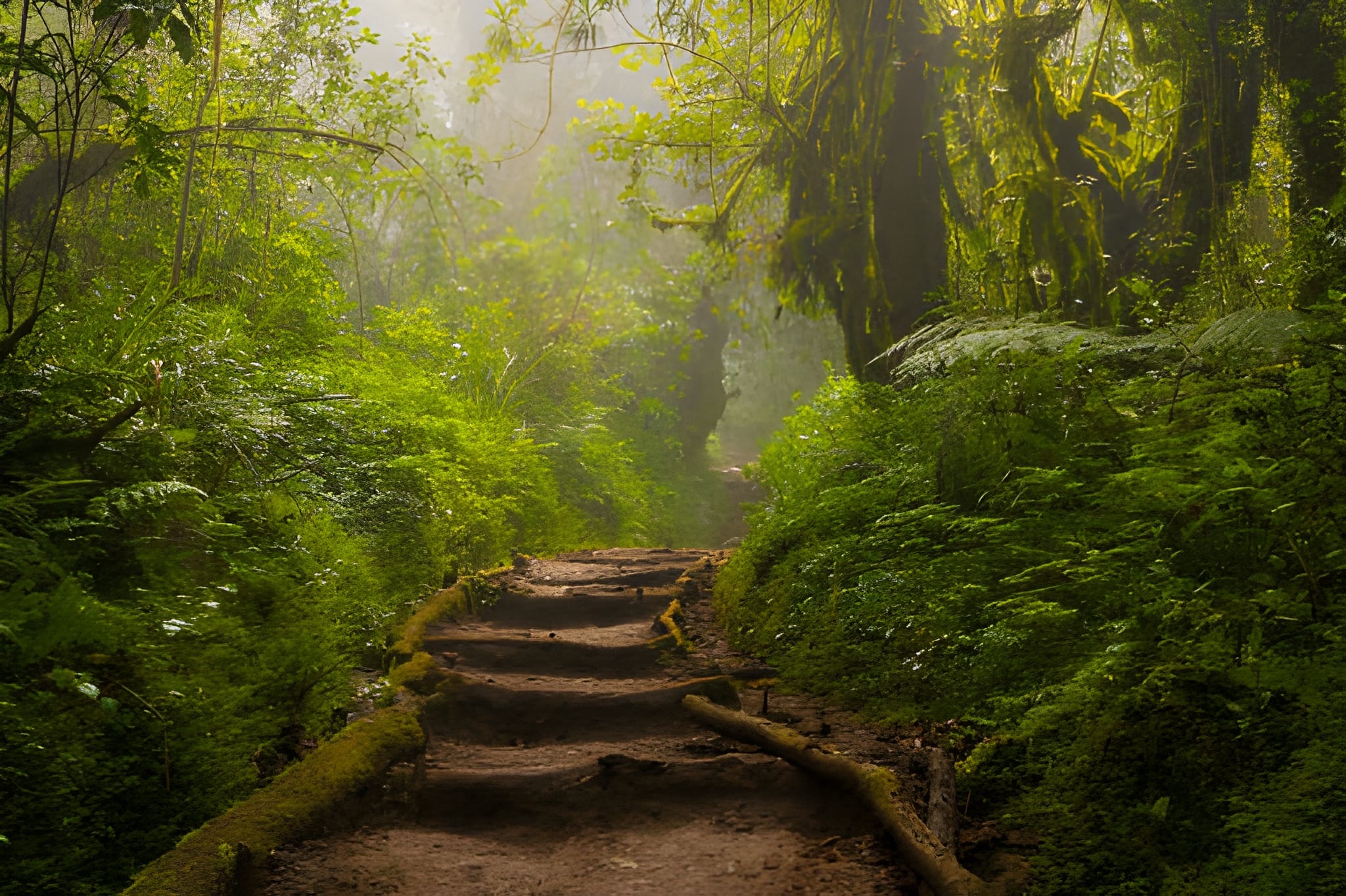
You’ve decided to climb Kilimanjaro. Congratulations. Now you face your first major decision — arguably the most important one you’ll make before setting foot on the mountain: Which route?
Ask ten different climbers, and you’ll get ten different opinions. Some swear by the social atmosphere of Machame. Others insist Lemosho’s western approach is the only sensible choice for beginners. And a loyal few still defend Marangu’s hut accommodations against all critics.
Here’s the truth that the Kilimanjaro Explore guides tell our clients during pre-climb Zoom briefings: There is no single “best” route. There is only the route that best fits your body, your budget, your timeline, and your temperament.
This guide breaks down the three most popular routes — Machame (7 days), Lemosho (8 days), and Marangu (6 days) — with real detail on terrain, acclimatization, crowd levels, success rates, and the specific type of climber each route serves best.
By the end, you’ll know exactly which route to book for your 2026 Kilimanjaro adventure.
Quick Comparison Table
Feature | Machame (7 days) | Lemosho (8 days) | Marangu (6 days) |
|---|---|---|---|
Nickname | "Whiskey Route" | "The Western Approach" | "Coca-Cola Route" |
Accommodation | Tents | Tents | Shared huts (bunk beds) |
Success Rate (Kilimanjaro Explore data) | 85-90% | 92-95% | 70-75% |
Scenery Variety | Excellent | Superior (most diverse) | Good (but repetitive return path) |
Crowd Level | Very high (busiest route) | Low to moderate (until merge) | Moderate (but huts feel crowded) |
Difficulty (subjective) | Moderate to Strenuous | Moderate (better acclimatization) | Moderate (but harder summit night) |
Best For | Social climbers wanting a "classic" experience | Beginners serious about summiting | Budget/solo climbers avoiding camping |
Now let’s dig into each route in serious detail.
Route 1: Machame – The Social Climber’s Choice
The Overview
The Machame Route, often called the "Whiskey Route" (a nod to its tougher reputation compared to Marangu's "Coca-Cola" moniker), is the most popular route on Kilimanjaro. Approximately 45% of all climbers choose Machame each year. It approaches from the southwest, typically takes 7 days (6 nights on the mountain), and is entirely tent-based camping.
Day-by-Day Reality
Day 1: Machame Gate (1,640m) to Machame Camp (2,835m) – 5-6 hours through dense, often muddy rainforest. You’ll see colobus monkeys if you’re lucky. The trail is steep from the start.
Day 2: Machame Camp to Shira Camp (3,840m) – 4-5 hours. The forest gives way to heath and moorland. You’ll get your first sweeping views of the mountain.
Day 3: Shira to Barranco Camp (3,960m) via Lava Tower (4,630m) – 6-8 hours. This is your critical acclimatization day. You climb high to Lava Tower, then descend to sleep at Barranco. This day makes Machame superior to Marangu.
Day 4: Barranco to Karanga Camp (4,035m) – 4-5 hours. The famous Barranco Wall awaits – a 45-minute near-vertical scramble. It’s not technically difficult (no ropes needed), but it’s intimidating and requires using your hands. Many beginners find it exhilarating.
Day 5: Karanga to Barafu Camp (4,640m) – 3-4 hours. Short day to rest before summit night. You’ll see the summit cone looming above.
Day 6: Summit Night – Barafu to Uhuru Peak (5,895m) to Mweka Camp (3,100m) – 12-15 hours total. Departure around 11 PM. Six to eight hours of climbing in darkness, sub-freezing cold, and half the oxygen of sea level. Then a 6-7 hour descent back to camp and further down.
Day 7: Mweka Camp to Mweka Gate (1,640m) – 3-4 hours. Celebration, certificates, and transport back to Moshi.
Who Machame Is For
The social climber: Machame attracts large groups. If you enjoy shared meals, swapping stories with fellow climbers from around the world, and the camaraderie of a busy campsite, you’ll love Machame.
The "classic experience" seeker: There’s a reason Machame is so popular. It delivers everything you imagine when you picture climbing Kilimanjaro – stunning sunrise views, varied terrain, and the satisfying challenge of the Barranco Wall.
The 7-day constrained climber: You have exactly one week for the climb (plus travel days). Machame fits.
Who Should Think Twice
Crowd-averse climbers: Machame is crowded. Really crowded. On peak season days, you’ll queue at steep sections. Campsites fill with hundreds of tents. If solitude matters to you, choose Lemosho.
First-time-ever campers: It’s doable, but Machame’s steeper sections and longer days leave less energy for learning camp routines. Lemosho’s gentler start is more forgiving.
Kilimanjaro Explore Insider Note
“Machame is our second-most recommended route for beginners. The 7-day itinerary provides adequate acclimatization for most, and the Barranco Wall – while intimidating – builds confidence. However, we strongly advise booking the 7-day version, not the 6-day ‘express’ version some operators sell. That extra day at Karanga makes a measurable difference in summit success.”
Route 2: Lemosho – The Beginner’s Best Bet for Summiting
The Overview
The Lemosho Route is, in the professional opinion of the Kilimanjaro Explore guide team, the optimal choice for first-time climbers who are serious about reaching Uhuru Peak. It approaches from the west, takes 8 days (7 nights on the mountain), and offers the most gradual acclimatization profile of any standard route.
Lemosho begins with a drive to the Londonosi Gate, followed by a trek through pristine, rarely visited rainforest. You’ll spend your first three days on the western slope, completely separated from the Machame and Marangu crowds, before merging with the Machame route near Lava Tower.
Day-by-Day Reality
Day 1: Londonosi Gate (2,100m) to Mti Mkubwa Camp (2,650m) – 3-4 hours. A short, gentle introduction. "Mti Mkubwa" means "Big Tree" in Swahili – you’ll camp beneath ancient fig trees.
Day 2: Mti Mkubwa to Shira 1 Camp (3,500m) – 5-6 hours. The forest thins to heath. Your first views of the summit appear.
Day 3: Shira 1 to Shira 2 Camp (3,850m) – 4-5 hours. A relatively flat day across the Shira Plateau – an ancient caldera that offers otherworldly volcanic landscapes.
Day 4: Shira 2 to Lava Tower (4,630m) to Barranco Camp (3,960m) – 6-7 hours. This is Lemosho’s secret weapon. You climb high to Lava Tower for lunch (exposing your body to altitude), then descend nearly 700 meters to sleep at Barranco. This “climb high, sleep low” day dramatically improves your summit odds.
Day 5: Barranco to Karanga Camp (4,035m) – 4-5 hours. Same as Machame – including the Barranco Wall scramble.
Day 6: Karanga to Barafu Camp (4,640m) – 3-4 hours. Rest and preparation for summit night.
Day 7: Summit Night – Barafu to Uhuru Peak to Mweka Camp – 12-15 hours. Same challenging summit push.
Day 8: Mweka Camp to Mweka Gate – 3-4 hours. Descent and celebration.
Who Lemosho Is For
The beginner who wants the highest chance of success: This is the core audience for Lemosho. The 8-day schedule provides an extra full day of acclimatization compared to Machame and two extra days compared to Marangu. For the Kilimanjaro Explore team, that extra time translates directly into summit success.
The photographer or nature lover: Lemosho offers the most diverse scenery of any route – rainforest, heath, the Shira Plateau (a high-altitude desert), alpine zones, and glacial views. You’ll also see more wildlife (buffalo, elephants are rare but possible on the western slope).
The crowd-averse climber: For the first three days, you’ll see only your group and perhaps one or two other small teams. The campsites are quiet. You can actually hear the mountain.
Who Should Think Twice
The budget-conscious climber: Eight days on the mountain means eight days of park fees, guide salaries, porter wages, and food. Lemosho is typically $300-500 more expensive than Machame and $500-700 more than Marangu.
The time-limited climber: You need 10-11 days total including travel and buffer days. If you can only spare 7-8 days total, Lemosho won’t fit.
The non-camper with serious tent anxiety: While our guides make camping comfortable, Lemosho is entirely tent-based. If the thought of sleeping in a tent for eight nights genuinely distresses you, Marangu’s huts are a valid alternative (though we’ll discuss the trade-offs).
Kilimanjaro Explore Insider Note
“If a client asks us, ‘What route gives me the best chance to summit as a beginner?’ we answer Lemosho without hesitation. Our internal data shows a 92-95% success rate for 8-day Lemosho climbers who complete our recommended training plan. The only route with higher success rates is the 9-day Northern Circuit, which requires significantly more time and budget.”
Route 3: Marangu – The Comfortable Compromise
The Overview
The Marangu Route is the oldest, most established route on Kilimanjaro. It’s often called the "Coca-Cola Route" because it’s perceived as the easiest and most comfortable – though any guide will tell you that the final summit night is every bit as brutal as any other route.
Marangu approaches from the southeast, takes 6 days (5 nights on the mountain), and is unique in offering shared hut accommodations (bunk beds in wooden A-frame buildings) instead of tents. This single difference drives most climbers’ decisions.
Day-by-Day Reality
Day 1: Marangu Gate (1,860m) to Mandara Hut (2,700m) – 4-5 hours through rainforest. A gentle start.
Day 2: Mandara to Horombo Hut (3,720m) – 5-6 hours. Forest gives way to heath and moorland. You’ll see giant senecios and lobelias – prehistoric-looking plants unique to Kilimanjaro.
Day 3: Horombo to Kibo Hut (4,703m) – 5-6 hours. The landscape becomes alpine desert. You’ll feel the altitude. Many climbers experience mild AMS symptoms tonight.
Day 4: Summit Night – Kibo Hut to Uhuru Peak to Horombo Hut – 10-12 hours total. Departure around 11 PM. The climb to Gilman’s Point (5,681m) on the crater rim takes 5-6 hours. From Gilman’s to Uhuru Peak (the true summit) adds another 1-2 hours along the crater edge. Then you descend all the way back to Horombo Hut – a long, exhausting day.
Day 5: Horombo to Mandara Hut – 5-6 hours. Descent.
Day 6: Mandara to Marangu Gate – 4-5 hours. Finish.
The Critical Flaw: Acclimatization
Marangu’s 6-day itinerary includes only one real acclimatization opportunity. On Day 3, you climb from Horombo (3,720m) to Kibo (4,703m) – a straight ascent of nearly 1,000 meters. There’s no “climb high, sleep low” day. You simply go up, sleep, then attempt the summit.
This is why Marangu’s success rate is significantly lower – 70-75% compared to 85-95% for longer routes. Your body simply has less time to adjust.
Who Marangu Is For
The solo traveler on a budget: Marangu is the most affordable route. The hut accommodation means you don’t need to rent or buy camping gear. Shared huts also provide built-in social interaction for solo climbers.
The non-camper: If you genuinely cannot or will not sleep in a tent – due to back problems, anxiety, or simply preference – Marangu is your only option among the main routes. (Note: The Northern Circuit also has huts, but it’s longer and more expensive.)
The time-pressed climber: You have exactly 6-7 days total for the climb. Marangu fits.
The “just want to say I did it” climber: If your goal is simply to stand on Uhuru Peak, and you’re willing to accept a lower success rate in exchange for comfort and convenience, Marangu works.
Who Should Think Twice
Anyone serious about summiting: This is the hard truth. If summiting is your primary goal, and you have the flexibility to take 8 days, Lemosho or Machame give you objectively better odds. We’ve guided too many heartbroken climbers down Marangu who simply ran out of acclimatization time.
The privacy seeker: Huts mean sharing bunk rooms with 10-20 other climbers. Snoring, coughing, headlamps at 2 AM – it’s communal living. Some love it. Some hate it.
Kilimanjaro Explore Insider Note
“We still offer Marangu, and we guide it well. But we are transparent with clients: if you choose Marangu, you are trading summit probability for hut comfort. For some climbers, that is the right trade. For most beginners, it is not. If you are set on Marangu, we strongly recommend the 7-day version (adding an extra acclimatization day at Horombo Hut). The cost difference is minimal; the success rate difference is substantial.”
Head-to-Head Comparison: Which Factor Matters Most to You?
Scenery
Winner: Lemosho. The Shira Plateau alone is worth the extra day. Machame is beautiful but crowded. Marangu is pleasant but repetitive (you descend the exact same path you climbed).
Success Rate (Beginners)
Winner: Lemosho (92-95%). Machame (85-90%) is excellent. Marangu (70-75%) lags significantly.
Comfort (Non-Summit)
Winner: Marangu (huts). Lemosho and Machame camping is comfortable – quality tents, sleeping pads, hot meals – but huts are warmer and drier.
Budget
Winner: Marangu. Lower park fees (fewer days), no tent rental, shorter guide/porter contracts. Expect to save $300-700 compared to Lemosho.
Solitude
Winner: Lemosho. Marangu and Machame are both crowded, though at different points. Marangu’s huts concentrate people. Machame’s trails queue.
Difficulty (Subjective)
Tie: Lemosho is easiest on the body (gentler days, better acclimatization). Machame has the most intimidating single feature (Barranco Wall). Marangu has the hardest summit night (no pre-acclimatization, longer from Gilman’s to Uhuru).
The Kilimanjaro Explore Recommendation
After guiding thousands of beginner climbers, our recommendation is clear:
First choice: Lemosho (8 days) – if you have the time and budget. This route maximizes your summit probability while minimizing physical strain through superior acclimatization. The extra day on the mountain is the single best investment you can make in your success.
Second choice: Machame (7 days) – if you are reasonably fit, comfortable camping, and cannot take 8 days. Avoid the 6-day version entirely. Book the 7-day with the Karanga overnight.
Third choice: Marangu (6 or 7 days) – only if you refuse to camp or have severe time/budget constraints. If you choose Marangu, pay extra for the 7-day itinerary with an acclimatization day at Horombo Hut.
Your Next Steps with Kilimanjaro Explore
Whichever route you choose, the Kilimanjaro Explore team will ensure you are prepared. Our pre-climb Zoom briefings cover your specific route day-by-day. Our guides – led by senior guides like Gilberto Bureta – have summited each route hundreds of times and know every shortcut, every water source, and every early sign of altitude sickness.
Ready to book your 2026 climb? Contact our travel consultants. We’ll ask about your fitness, budget, timeline, and personal preferences – then recommend the specific route and itinerary tailored to you.
The mountain is waiting. Choose your path wisely.