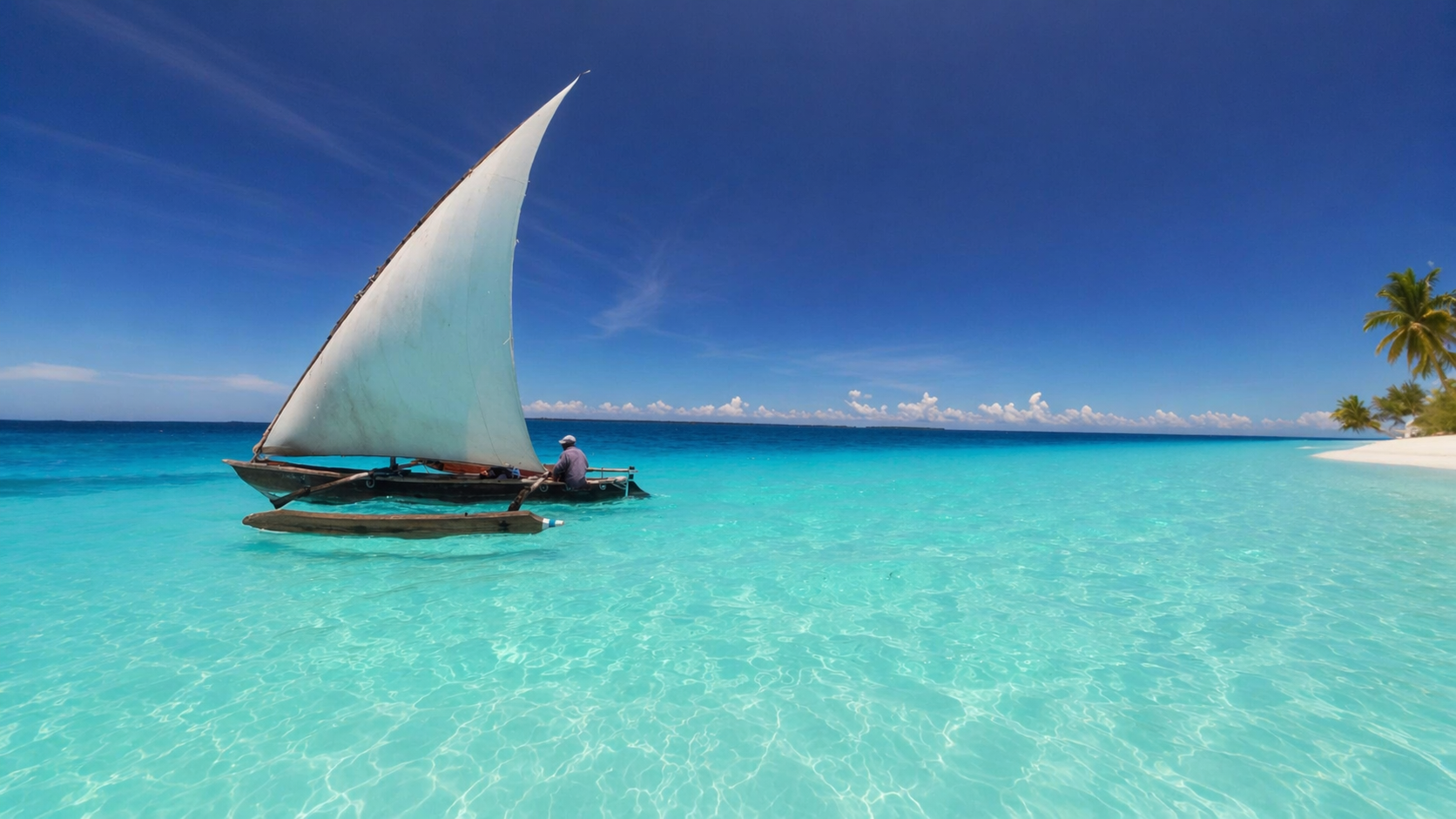
In the heart of Stone Town, Zanzibar, where the labyrinthine alleys spill into the shimmering heat of the Indian Ocean, stands a monument not of glass and steel, but of fossilized coral and human ambition. The Old Fort, known in Swahili as Ngome Kongwe (literally "Old Fort"), is more than just a tourist stop or a backdrop for festival lights. It is the oldest building in Stone Town, a silent witness to nearly four centuries of brutal colonialism, bloody rebellion, the claustrophobia of the slave trade, and the eventual, vibrant rebirth of a nation. To walk through its massive, time-worn entrance is to step into a compressed history of the Swahili Coast.
Historical Origins: From Portuguese Folly to Omani Might
The story of the Old Fort begins not with the Omanis, but with their predecessors: the Portuguese. Vasco da Gama’s arrival in the late 15th century heralded a century of Portuguese domination over key trading ports along the East African coast. By the early 1500s, the Portuguese had seized Zanzibar, using it as a resupply base and a strategic foothold to control the lucrative spice and slave trades. However, their rule was deeply resented. The Portuguese built a modest, unfortified church and trading post on the site of what is now the fort. They were more focused on their major stronghold at Fort Jesus in Mombasa, leaving Zanzibar as a secondary, vulnerable asset.
That vulnerability became catastrophic in 1698. After a bloody two-year siege of Fort Jesus, the Omani Arabs, led by the formidable ruler Imam Saif bin Sultan, finally expelled the Portuguese from the entire Swahili Coast. The Portuguese retreated to Mozambique, leaving behind their small church and trading lodge in Zanzibar.
The Omanis, keenly aware that the Portuguese might return, decided to make a permanent statement of power. Between 1698 and 1701, they razed the Portuguese church and, using the very coral stone from its ruins, built a formidable fortress. Some sources suggest that the Portuguese had already begun a rudimentary defensive wall, which the Omanis expanded upon. Regardless, the message was clear: Zanzibar was now under Omani rule. The fort was not just a military installation; it was a psychological weapon, a massive, dark presence designed to intimidate both the local Swahili population and any European ships that dared to approach the harbor.
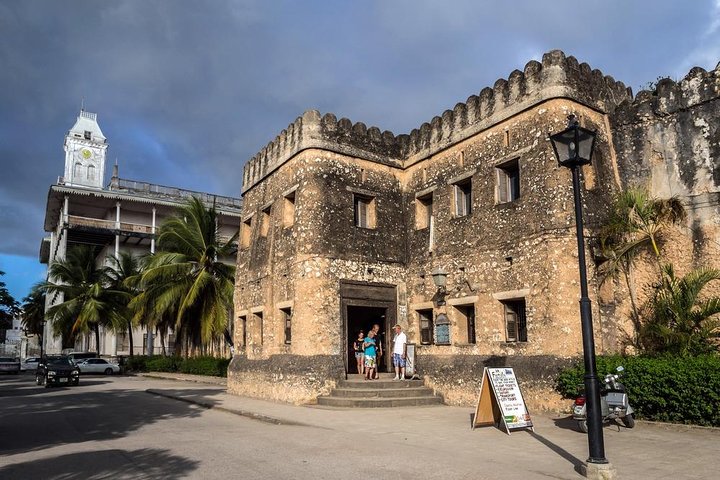
The construction was a feat of pre-industrial engineering. Lacking imported stone, the builders quarried blocks of coral rag from the nearby coastline. Coral rag is a soft, porous limestone formed from ancient coral reefs. When freshly cut, it is relatively easy to shape, but as it dries and is exposed to the air, it hardens considerably. The blocks were mortared together with lime, also derived from burnt coral. Over centuries, this material has aged into the distinctive, warm reddish-brown hue that defines Stone Town’s architecture. The fort’s walls are massive—up to 10 meters (33 feet) high and 1.5 meters (5 feet) thick in places—designed to withstand cannon fire from the sea.
Architecture: A Fortress of Coral and Shadows
The Old Fort’s design is a pragmatic blend of Omani military architecture and local building techniques. From the outside, it presents an imposing, almost windowless facade. The main entrance, a single arched gate on the western side facing the Forodhani Gardens, is deceptively simple. Once you pass through, however, the interior reveals itself: a large, open courtyard, roughly rectangular in shape, surrounded by two levels of battlements and rooms.
The fort originally featured 51 crenellations along its walls, each one a notched tooth of coral stone behind which defenders could fire arrows or muskets. A round watchtower, called the "Rounded Bastion," stands at the southeastern corner, offering a panoramic view of the harbor. This was the fort’s primary defensive focal point. In the center of the courtyard, you can still see the foundation of the old Portuguese church, a quiet archaeological nod to the vanquished.
But the most distinctive—and notorious—feature of the fort was its underground chambers. Beneath the main courtyard lie a series of dark, cramped rooms with small, barred openings near the ceiling. These were the yerejan (slave holding cells). After the Omani Sultanate shifted its capital to Zanzibar in 1840 under Sultan Said bin Sultan, the island became the epicenter of the East African slave trade. As many as 50,000 enslaved people per year passed through the Zanzibar slave market. The Old Fort served as a primary holding pen. Captured men, women, and children from as far inland as modern-day Malawi and the Democratic Republic of Congo were packed into these subterranean cells, often for weeks, awaiting auction. The conditions were indescribable: suffocating heat, disease, starvation, and death were constant companions. The floors of these cells are worn smooth by the shuffle of countless bare feet, and the air still feels heavy with history’s sorrow.
Later, during the period of the Omani and British protectorates, the fort’s role diversified. It served as a military garrison for Omani askari (soldiers). For a time, its upper rooms were used as a prison, housing common criminals and, occasionally, political dissidents. In a fascinating turn of industrial history, the fort also became the original terminus of the Zanzibar Railway. In the early 20th century, a narrow-gauge railway line ran from the fort’s gates into the interior of the island, transporting agricultural goods and building materials. You can still see the remnants of the rail tracks embedded in the ground just outside the main entrance.
Decline and a Violent Reawakening
By the mid-20th century, the Old Fort had fallen into disrepair. The British protectorate (established in 1890) had little use for a decaying Omani fortress. The cells were abandoned, the battlements crumbled in places, and the courtyard became a dumping ground. Locals often avoided the area, associating it with the ghosts of the enslaved and the cruelty of the past.
The fort’s modern reincarnation began after the Zanzibar Revolution of 1964, which overthrew the Arab Sultanate and established the Republic of Zanzibar and Pemba. For a few decades, the fort was used intermittently as a training ground for the People’s Liberation Army and as a depot. It was not until the 1990s, with the rise of Zanzibar’s tourism industry and a concerted effort by the government and international heritage organizations (notably the Aga Khan Trust for Culture), that the Old Fort was fully restored.
The restoration was careful. The goal was not to make it look new, but to stabilize the coral rag masonry, repair the wooden walkways on the upper ramparts, and convert the former military rooms into usable spaces for the community. Critically, the slave cells were preserved, not sanitized, serving as a sobering reminder of the island’s role in one of history’s greatest atrocities.
Current Status: A Vibrant Cultural Hub
Today, the Old Fort has completed a remarkable transformation from a place of confinement and defense to a place of expression and celebration. It is now the headquarters of the Zanzibar International Film Festival (ZIFF) , also known as the Festival of the Dhow Countries. Every July, the fort’s courtyard is transformed into an open-air cinema. A massive white screen is erected against one wall, while hundreds of plastic chairs and floor cushions fill the courtyard. Filmgoers watch African, Arab, Indian, and European cinema under a canopy of stars, with the sound of waves from the nearby harbor providing a natural soundtrack.
Beyond ZIFF, the fort is a year-round cultural center. The former garrison rooms on the ground floor have been converted into a bustling open-air bazaar of local artisans. Here, you can find everything from Maasai beaded jewelry and Tingatinga paintings to hand-carved wooden chests (sanduku), kangas (colorful fabric wraps), and drums made from cowhide. Unlike the aggressive touts of the main market, the fort’s vendors are generally more relaxed, inviting you to browse at your leisure. It is an excellent place to buy authentic, non-mass-produced souvenirs.
The upper ramparts are accessible via a steep staircase. Walking along the top of the walls, you can peer out through the crenellations, imagining Omani sentries scanning the horizon for Portuguese carracks. To the north, you see the House of Wonders (Beit-al-Ajaib), Zanzibar’s other iconic landmark, with its soaring clock tower and cast-iron pillars. To the south, the turquoise waters of the Zanzibar Channel sparkle. Inside the courtyard, a small café serves cold drinks, spiced tea, and fresh sugarcane juice. On most evenings, local troupes perform traditional Taarab music (a Swahili genre blending African, Arabic, and Indian influences) and ngoma drumming and dance. The acoustics within the coral walls are surprisingly good, creating a natural amphitheater.
Visiting the Old Fort: Practical Information
For the modern traveler, the Old Fort is an unmissable stop on any Stone Town itinerary. Here is what you need to know:
Location: It is situated directly across from the Forodhani Gardens and the main seafront, just a two-minute walk from the House of Wonders and the Sultan’s Palace Museum.
Cost: One of the best things about the fort is that it is free to enter (though donations are often appreciated). Unlike many heritage sites in East Africa, there is no formal ticket booth, reflecting its role as a public space rather than a commercial attraction.
Hours: The fort is open daily, typically from 8:00 AM to 8:00 PM. The shops open around 9:00 AM and close at dusk. Evening cultural performances usually start around 7:00 PM.
What to Expect: The main courtyard is an open, gravel-covered area. Wear sturdy, comfortable shoes as the ground is uneven. Sunscreen and a hat are essential, as there is little shade in the courtyard (though the upper rooms offer some respite).
Time Required: Most visitors spend between 45 minutes and 1.5 hours here. However, if you plan to shop carefully or catch a film, you could easily stay for an evening.
The Verdict: A Small Site with a Vast Soul
It is true that some visitors, expecting a museum packed with artifacts or a sprawling palace, describe the Old Fort as a "small area with not many items on display." There are no glass cases filled with golden jewelry, no rewritten dioramas of sultans. The fort’s "displays" are the walls themselves, the worn floors of the slave cells, the view from the battlements, and the living culture that now fills its spaces.
The Old Fort does not shout its history; it whispers it. You have to listen. You have to stand in the slave cell and feel the darkness. You have to touch the coral stone, still pitted by sea fossils, and realize it was quarried by enslaved hands. Then, you have to walk back into the sunlight, into the sound of drumming and the smell of cloves and grilled seafood from the Forodhani night market.
In that contrast—between the fort’s brutal past and its vibrant present—lies the true soul of Zanzibar. Ngome Kongwe is not merely a relic. It is a living, breathing document of resilience. It reminds us that even the most oppressive walls can, with time and will, become the foundations for art, community, and freedom. For anyone seeking to understand the layered, complex history of the Swahili Coast, a visit to the Old Fort is not just recommended; it is essential.