Ngorongoro Crater National Park
Ngorongoro Crater, Tanzania

Discover the iconic Ngorongoro Crater National Park, Tanzania
Ngorongoro Crater National Park, located in northern Tanzania, is a UNESCO World Heritage Site and one of the most famous wildlife reserves in Africa . It is renowned for its massive, intact volcanic caldera, which is home to a high density of wildlife, including the critically endangered black rhinoceros . The park is also a popular destination for safaris, offering opportunities to see the “Big Five” animals .
Safari Cost
What are the main attractions of the Ngorongoro Crater National Park?
The Crater
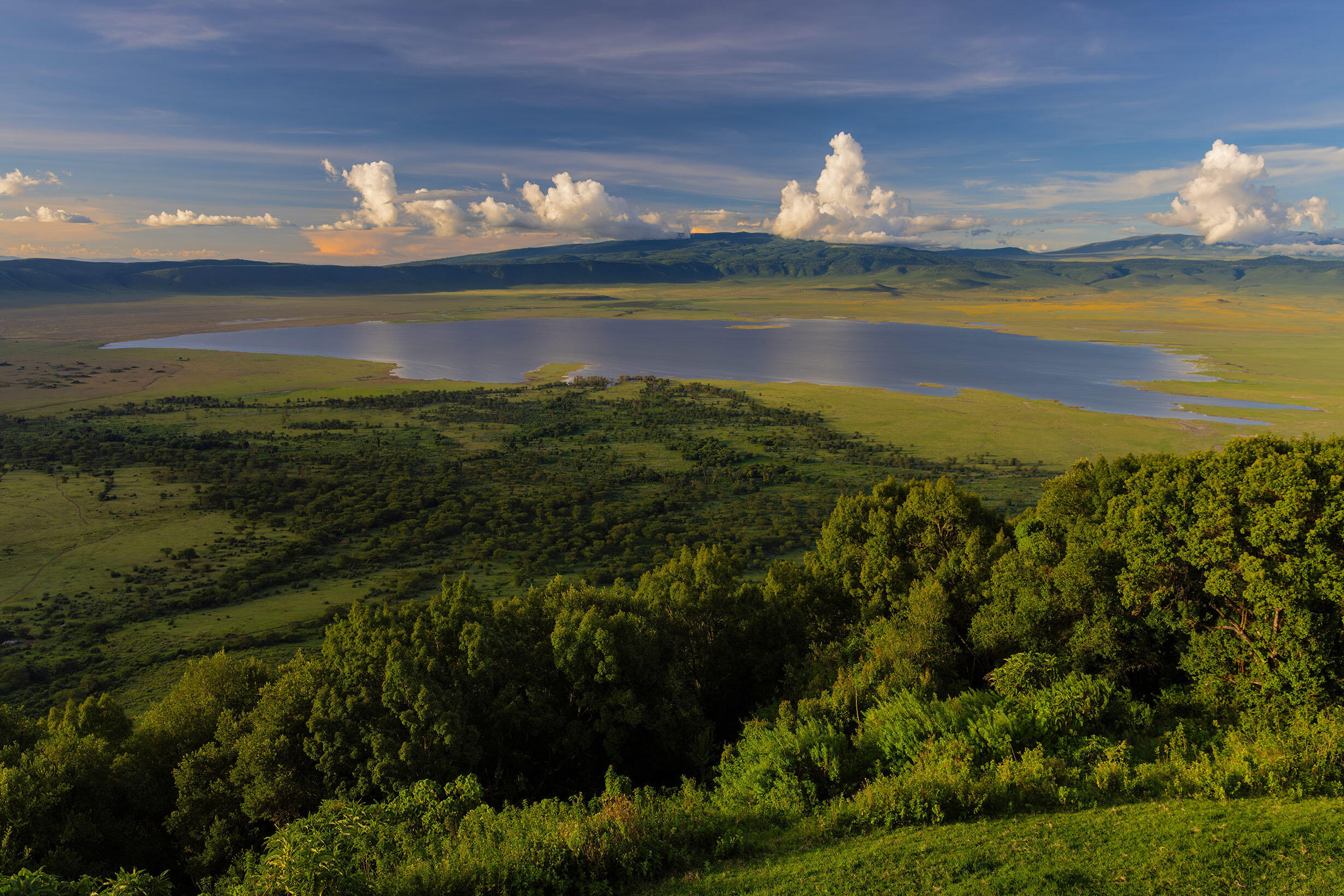
.The Ngorongoro Crater is the world’s largest unbroken caldera, formed about 2.5 million years ago. It is approximately 18-20 kilometers in diameter and 610 meters deep, creating a unique ecosystem that supports a vast array of wildlife .
Wildlife
The crater is home to an estimated 25,000 large animals, including lions, elephants, black rhinos, and the “Big Five” . It is also a prime location for spotting the rare black rhinoceros . The surrounding area is part of the larger Ngorongoro Conservation Area, which is adjacent to the Serengeti National Park .
Birdlife
The crater is a haven for birdwatchers, with flamingos often seen in large numbers at Lake Magadi, a seasonal salt lake . Other bird species include ostriches, kori bustards, and various raptors .
History of Ngorongoro Crater National Park
Frequently Asked Questions about the Ngorongoro Crater National Park
Where is Ngorongoro Crater located?
How do I get to Ngorongoro Crater?
Ngorongoro Crater and Serengeti National Park are both iconic safari destinations in Tanzania, but they offer distinct experiences. Ngorongoro is a massive, enclosed volcanic caldera known for its high animal density and unique ecosystem, while Serengeti is a vast, open savannah famous for its annual Great Migration . The choice between them depends on what kind of wildlife and landscape a visitor is seeking .
Wildlife and Ecosystem
Ngorongoro Crater: This is the world’s largest intact caldera, creating a self-contained environment with a high concentration of wildlife . It is one of the few places in Africa where the critically endangered black rhinoceros can be reliably seen . The crater’s stable ecosystem supports a wide variety of animals, including the “Big Five” (lion, leopard, elephant, buffalo, and rhino), as well as numerous bird species like flamingos . The high density of animals makes sightings more frequent and less dependent on timing .
Serengeti National Park: This is a vast, open savannah that is the primary habitat for the Great Migration, a natural phenomenon where millions of wildebeest, zebras, and gazelles move across the plains in search of water and fresh grazing . The park is also home to a large population of lions and other predators, but the animal density is generally lower than in Ngorongoro . The Serengeti’s landscape is more expansive and offers a different kind of wilderness experience .
Landscape and Experience
Ngorongoro Crater: The crater’s unique topography creates a dramatic and almost otherworldly setting . The descent into the crater is a memorable part of the journey, and the flat, grassy floor provides excellent visibility for spotting animals . The surrounding area includes beautiful lakes and marshes, which are great for birdwatching . The experience is often described as more intimate and concentrated .
Serengeti National Park: The Serengeti is known for its vast, open landscapes and the sense of endless horizon . The park is much larger than Ngorongoro, and the experience is more about the scale and the feeling of being part of a massive, ancient ecosystem . The Great Migration, which can be seen in certain parts of the park depending on the season, is a major draw for many visitors .
Best Time to Visit
Ngorongoro Crater: The best time to visit is during the dry season (June to October), when animals gather around water sources, making them easier to spot . This period also offers excellent conditions for birdwatching, as flamingos congregate in large numbers .
Serengeti National Park: The best time to visit depends on what you want to see . The Great Migration typically moves through the southern Serengeti from December to March, while the northern Serengeti is best from June to July . The dry season (June to October) is also a good time for general wildlife viewing .